 Radoslaw Maciejewski/Shutterstock
For many of us, keeping our smartphones, gadgets, laptops, and even our cars charged up and ready when we need them has become a daily ritual — even if we pick up some bad charging habits along the way. It seems that rechargeable batteries and the devices they power are everywhere. Yet, while rechargeable batteries are responsible for powering much of the world around us, there are still certain circumstances in which the good old-fashioned non-rechargeable battery is still a better option.
This might seem counterintuitive. After all, rechargeable batteries are convenient, cost-saving, more environmentally friendly, and perfect for all the high-drain devices that are commonplace today. Compared to the wastefulness of disposables, there are very few practical arguments for opting for single-use. But there are technical arguments.
One of the main differences between the battery types is their discharge rates. Rechargeable batteries discharge power at a steady rate until the battery is almost depleted, at which point the available voltage drops off a cliff. For contrast, a typical alkaline single-use battery discharges at a more predictable rate. This might seem like an inconsequential matter, but in practice, it means that rechargeable batteries are not ideal for devices like smoke alarms and emergency equipment.
Another factor is voltage and device sensitivity. Many rechargeable AA or AAA batteries deliver around 1.2 V nominally, compared to 1.5 V for standard alkalines. This means that some older or low-voltage devices won't work optimally, or at all, with the lower voltage of rechargeables.
Why do some devices still need disposable batteries
 Alexlmx/Getty Images
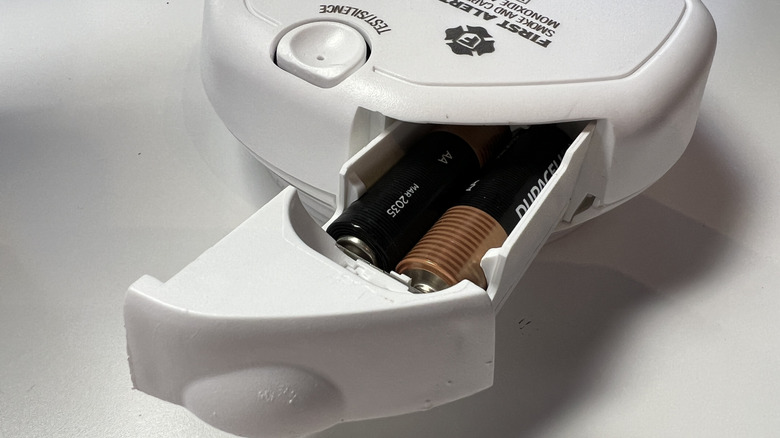
We will cover the technicalities of why rechargeables don't always behave like disposable batteries later. But first, let's look at which devices are affected. Perhaps the most important category is safety devices. Devices such as smoke alarms, carbon monoxide detectors, and emergency flashlights rely on batteries that retain their charge for long periods without user intervention. Non-rechargeables are preferred here because they offer a long shelf life, predictable discharge behavior, and reliable "ready-when-needed" performance.
A second group includes low-drain household items that "sip" electrical power and can last many months on disposable batteries. Items in this category include wall clocks, remote controls, thermostats, and small radios. Again, non-rechargeables are more effective here thanks to their stable voltage and low self-discharge rates (rechargeable batteries continue to discharge even when not in use).
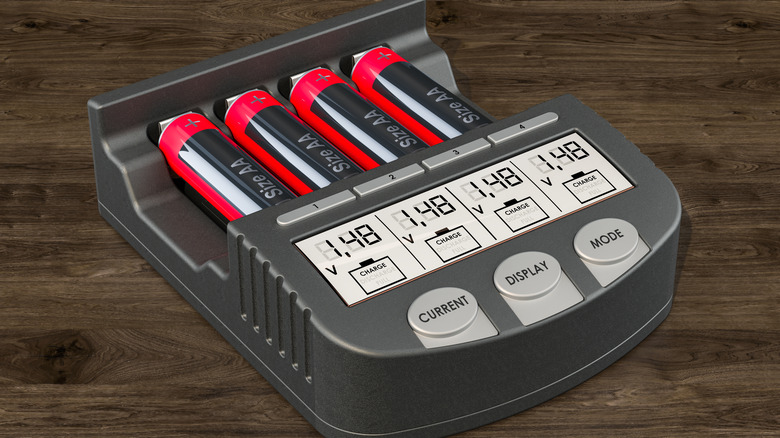
As noted, voltage sensitivity is another consideration. Many rechargeable AA or AAA batteries deliver a nominal 1.2 volts, with their non-rechargeable equivalents delivering 1.5 volts. Some older electronics or devices designed specifically around the higher alkaline voltage may not operate correctly with rechargeables. These can include powerful flashlights, certain digital cameras (normally those without proprietary power packs), and even electronic toys.
Finally, infrequently used gear — such as camping torches or emergency lights — tends to favor non-rechargeables simply because they can hold their charge for years. If a device needs to sit for prolonged periods, a disposable battery is a more reliable choice. Although it's never a bad idea to remove batteries from unused devices whenever possible.
How rechargeable and disposable batteries differ
 Smith Collection/gado/Getty Images
On the surface, the two battery types under discussion look similar, but beyond the obvious difference (single-use vs. rechargeable), there are several basic differences between lithium rechargeables and alkaline batteries.
A rechargeable AA or AAA battery — typically lithium, nickel-cadmium, or nickel-metal hydride — uses a chemistry designed to accept repeated charging cycles. One effect is that chemistry gives rechargeable batteries a low internal resistance, allowing them to deliver a higher burst of current on demand. That's why high-drain devices like motorised gadgets, digital cameras, and game controllers often feel more responsive on rechargeables despite the lower voltage. NiMH batteries also hold their voltage steady under load, although this chemistry is also responsible for the 1.2-volt profile and the sudden drop-off once the cell is nearly drained.
Single-use alkaline batteries behave differently. Their internal resistance rises as they discharge, which is why they struggle with sustained high-drain use but excel in low-power devices that draw small amounts of current over long periods. In short, the rechargeable battery may power most of our devices and electronics, but the humble disposable battery still has a little charge left. Remember, buying from the best battery brand is always a good practice, especially when they are powering important devices like smoke alarms or emergency torches.