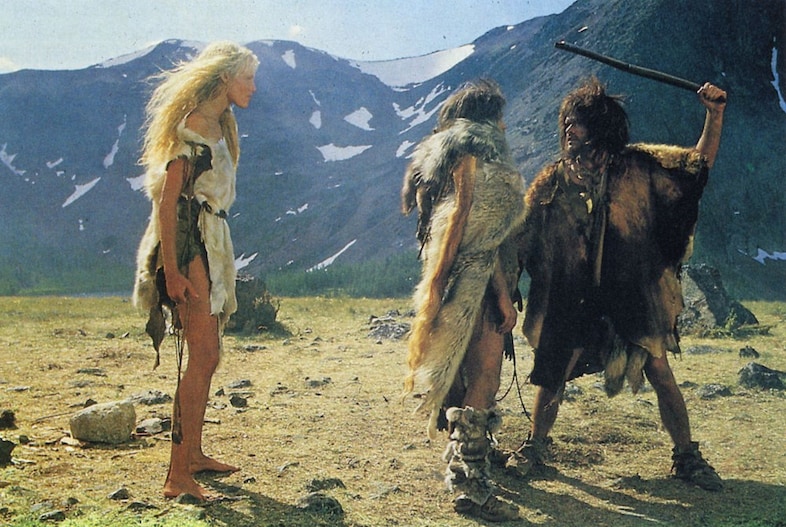
 The Clan of the Cave Bear (1986) film stillDecember
1,
2025Life & CultureFeatureWhat can extinct, 40,000-year-old Neanderthals teach us about being human?
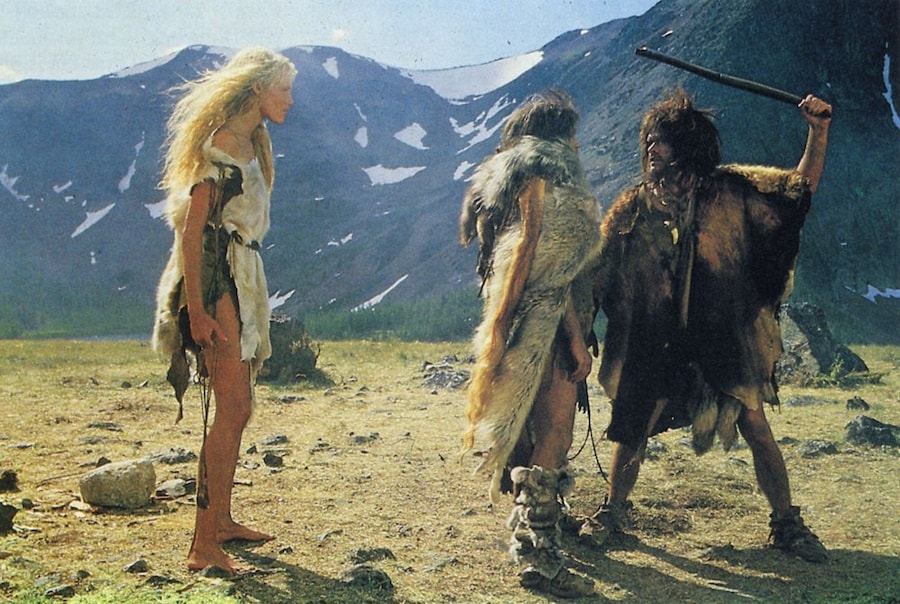
The Clan of the Cave Bear (1986) film stillDecember
1,
2025Life & CultureFeatureWhat can extinct, 40,000-year-old Neanderthals teach us about being human?From Grimes’ ‘Artificial Angels’ video to ill-advised beauty trends, humans have Neanderthals on the brain – here, we consult expert archaeologists to help uncover their secrets
ShareLink copied ✔️December 1, 2025Life & CultureFeatureTextThom WaiteRead More BeautyWe still call women hysterical – but now we do it through Botox
 Life & CultureAre we caught in a culture of never-ending catch-ups?
 BeautyCan psychedelics enhance your workout?
“I’ve been thinking about Neanderthals a lot,” said the musician Grimes in a recent podcast interview. The statement echoed imagery in her new music video, “Artificial Angels”, as well as an X post she made earlier this year: “I want to know the Neanderthals so badly, with every fiber of my soul. God, I think about it all day, it’s bizarrely clouding my thoughts – how much was lost? And how familiar or alien would their culture feel?”
It might seem surprising, but she’s not the only one with prehistoric humanoids on the brain as of late. They’ve played a central role in the A24 film Sasquatch Sunset and novels like Creation Lake. They’re cropped up in video games, fashion collections, and ill-advised beauty trends. People share Retvrn to Monke memes and watch shirtless men build primitive shelters on YouTube. Azealia Banks has been “haunted” by “wandering Neanderthal souls” in Prague.
It’s not entirely clear why Neanderthals are such a fixture in today’s cultural imagination. Is it because of climate change, which is causing their prehistoric living sites to thaw out, and revealing perfectly-preserved artefacts about the way they lived and interacted? Is it because of new technological developments that allow us to date their remains and artefacts, and decode their genes? Is it because these genes point to interbreeding with Homo sapiens – AKA us – as ‘recently’ as 50,000 years ago? Or because we, too, feel on the verge of going extinct as we encounter a new alien intelligence in the form of AI?
For Grimes, it has a lot to do with that final point: the idea that the cultures and habits of other human races, like Neanderthals, Denisovans, or the hobbit-like Homo floresiensis (broadly known as ‘hominins’), are largely lost to time, and this is a sad thing that we’d rather not repeat by wiping ourselves out with super-powerful technologies. But of course any interest in Neanderthal life ultimately trickles down from the painstaking research – and fiery debates – of archaeologists and anthropologists who have dedicated their lives to uncovering their ancient past.
So, in case the recent buzz about Neanderthals has sparked your curiosity – or dread, if you’re inclined toward Azealia Banks – we’ve enlisted two researchers at the cutting-edge of the field, to answer some of its most intriguing questions. Like: what set this species of prehistoric humans apart from Homo sapiens like you and I? What did their culture look like, and what was going on inside their heads? Did they love, hope, dream? Speaking to Dazed earlier this year, these scientists have scrabbled through the dirt, and pored over samples in the lab, so you don’t have to.
A POTTED (PRE)HISTORYAround 40,000 years ago, the Neanderthals – often described as our closest ancient relatives – mysteriously disappeared from the face of the Earth. In 1856, we rediscovered remains in Germany’s Neander valley, the place that gives them their name. Subsequent discoveries showed that they looked similar to modern humans, with some notable differences: heavy brows, a long and low skull, strong teeth, a wide chest, and short limbs. You’ll probably recognise this appearance from films and cartoons about cavemen, which overwhelmingly cast Neanderthals as the coarse and brutish cousin of the modern human.

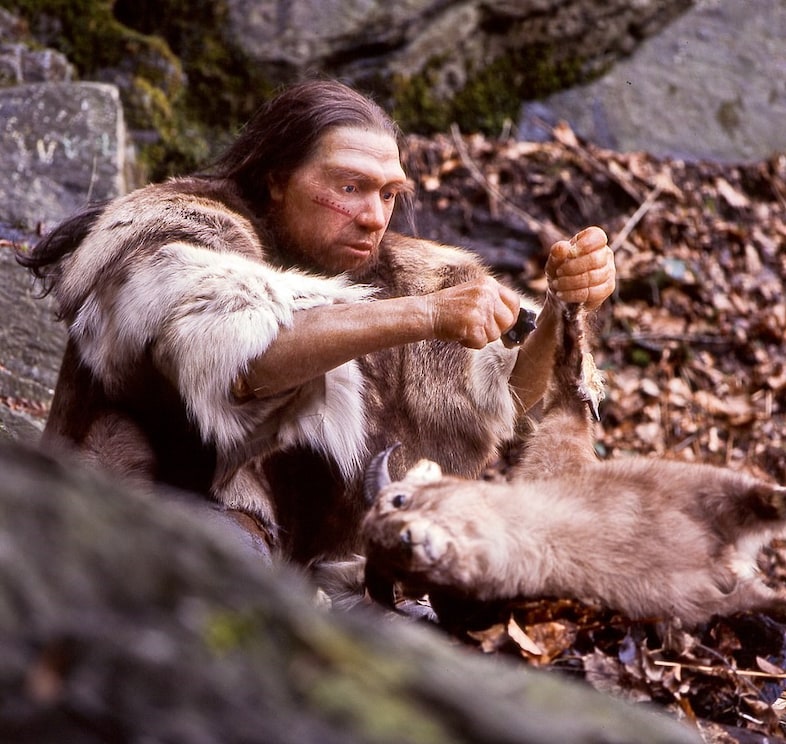 Neanderthal Museum, Mettmann, GermanyCourtesy of Neanderthal Museum, Mettmann, Germany
In reality, expert opinions on the lives of Neanderthals are much more complex. At times in the history of paleoarchaeology they have reinforced the idea that Neanderthals were a “failed experiment” genetically-speaking, says João Zilhão, an archeologist and research professor at the University of Lisbon. This falls in line with the 19th-century (or Christian) idea that modern humans are at the top of the “evolutionary ladder”. However, many researchers dating back to the 1980s took the opposite – but similarly simplistic approach – of positioning Neanderthals as little more than the ‘European’ equivalent of Homo sapiens, who were just getting started on the African continent a few hundred thousand years ago. Inspired by Neanderthal burial sites like Shanidar cave in Iraqi Kurdistan (which recent studies have cast doubt upon) they were desperate to reconcile the two forms of early human. “They said, ‘The technology was the same. They buried their dead. They looked after their sick and infirm. Their way of lives were similar. They were hunters and gatherers,’” adds Zilhão. “The field at the time was mostly concerned with very early steps of human evolution.”
Ultimately, much about the lives of Neanderthals still remains unanswered, and the hot debate about their true nature spans archaeology, genetic science, art history, and more. Adding fuel to the flames is the 2010 discovery of Neanderthal DNA in modern humans from Europe – funnily enough, this left us reluctant to write them off as dumb brutes with a love for clubbing each other over the head.
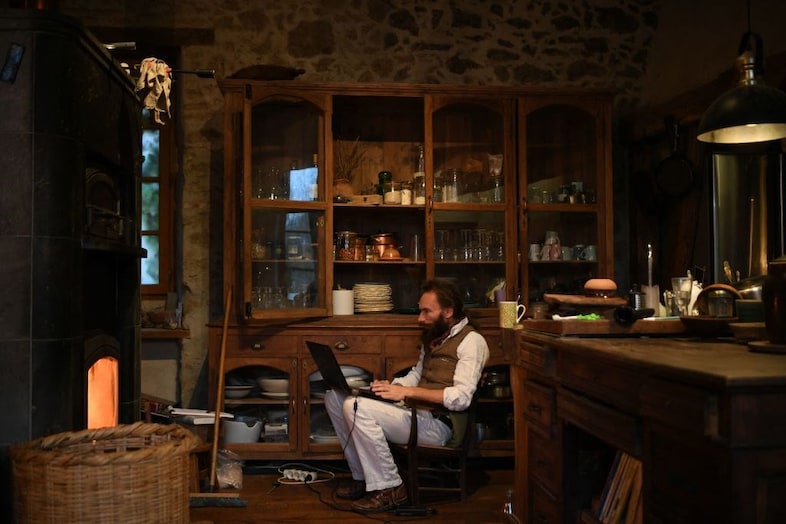 Ludovic Slimak works at his home in Saint-Laurent-sur-Save (2022)Photo by Matthieu Rondel/AFP via Getty Images
THE ‘NEANDERTHAL HUNTER’
Ludovic Slimak works at his home in Saint-Laurent-sur-Save (2022)Photo by Matthieu Rondel/AFP via Getty Images
THE ‘NEANDERTHAL HUNTER’
In his book The Naked Neanderthal, the ‘Neanderthal hunter’ and paleoanthropologist Ludovic Slimak breaks down this push and pull between our past characterisations of the Neanderthal – from primitive ape-men, to direct equals of Homo sapiens – and argues that both represent a fundamental misunderstanding. On this subject, Slimak is as good an authority as you’re going to get. For the last 30 years, he’s spent his life digging in caves and prehistoric sites across Turkey, the Horn of Africa, Ethiopia, Mongolia, the Arctic Circle, and France, where he now spends his summers excavating alongside his young kids and wife (the archaeologist Laure Metz).
Slimak looks the part too. His hair and beard are untamed, and he wears a waistcoat with an open white shirt, like an eccentric archaeologist out of a Hollywood film. When we speak – over video call, with a delay of a few seconds due to poor WiFi – he’s hunkered down in south-west France, where he spends the winter among stacks of books and ancient flint arrowheads, avoiding the administrative obligations that come with a position at the University of Toulouse, and “synthesising” the summer’s findings into his own books and papers.
If we try to define the Neanderthals... then, you begin to have a huge problem. You open Pandora’s box
Describing the traits and territories of Neanderthals is “very easy” according to Slimak, because it simply involves reciting the facts gleaned from various archeological digs over the last 150 years or so. “In that way, we know a lot,” he says. “But if we try to define the Neanderthals... then, you begin to have a huge problem. You open Pandora’s box.” This is largely because we bring a lot of our own preconceptions to the task, and our brains struggle to comprehend the idea that you can be human without being Homo sapiens. “It’s not only a limitation for the [general] audience with fantasies about prehistory and cavemen,” he adds. “It’s a problem for us for researchers too. Even scholars, people working in universities... we are not ready to really make this step, to redefine how to be human.”
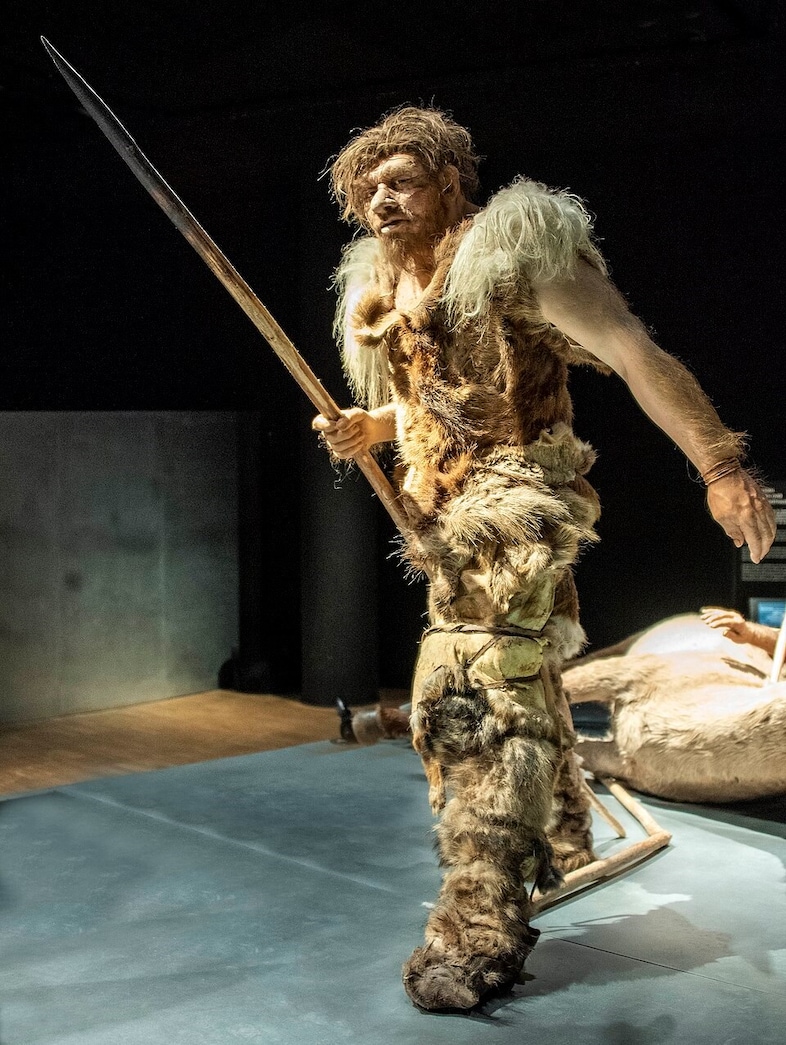 Neanderthal, Gallo-Roman Museum, TongerenPhoto Paul Hermans, via Wikimedia Commons
THE DEFINITION OF RACISM: ‘TO BE HUMAN, YOU HAVE TO BE LIKE ME’
Neanderthal, Gallo-Roman Museum, TongerenPhoto Paul Hermans, via Wikimedia Commons
THE DEFINITION OF RACISM: ‘TO BE HUMAN, YOU HAVE TO BE LIKE ME’
The Naked Neanderthal’s core argument is that the “rehabilitation” of the Neanderthal’s image is “distorted” by modern human beliefs, just as much as the brutish image that began with the first discoveries of remains in the 1800s. That is, we have been prejudiced toward Neanderthals in the past, thanks to their “archaic face” and alien way of life. However, by embarking on a well-meaning “anti-racist” campaign to rewrite their history, we’ve fallen into an archaeological “trap” and lost sight of some key differences between today’s humans and our very distant relatives.
“The definition of racism is to say, ‘To be human, you have to be like me,’” Slimak suggests, adding that the popularisation of this belief among researchers is “very dangerous” and “completely distorts” the facts unearthed in caves across Europe. Instead, he suggests, we should attempt to expand our understanding of what it means to be thoughtful, intelligent, creative, or any of the other traits we associate with being human.
MODERN ARCHAEOLOGY IS ‘LIKE ALCHEMY’There is something extraordinarily powerful about a discipline that lets you tell the truth based on small amounts of white powder in vials, processed in high-tech labs that look like a space station, by people in white suits. It’s magic – João Zilhão
A significant turn in Neanderthal research came along with advancements in molecular biology and high-tech dating methods. These made much of the actual work less romantic – less scrambling around in caves, more scrolling through data in a lab – but the geneticists ultimately won out, says Zilhão. “It’s like alchemy,” he says. “There is something extraordinarily powerful about a discipline that lets you tell the truth based on small amounts of white powder in vials, processed in high-tech labs that look like a space station, by people in white suits. It’s magic.” By comparison, he jokes: “Archaeologists are just educated peasants, who work with their hands and get dirty all the time. At best, we’re fossil hunters. We come up with the stuff that the proper scientists analyse.”
As a result of the empirical discoveries made by this new generation of scientists, the last 20 to 25 years have seen the idea that Neanderthals should be regarded as a highly developed human species grow stronger, Zilhão adds. “This notion of Neanderthals being dimwitted relatives that went extinct because they lacked in competition with a more evolved species of human became untenable.”
WHAT SCIENCE CAN’T TELL USWerner Herzog famously explores the Chauvet Cave, which holds the earliest-known figurative art by Homo sapiens, in his 2010 documentary The Cave of Forgotten Dreams. On seeing a digital replica of the cave in that film, he remarks: “It is like you are creating the phone directory of Manhattan. Four million precise entries, but do they dream? Do they cry at night?” In typical Herzog fashion, this gets to the heart of the problem with science and statistical data: it rarely, if ever, gets to the heart or ‘soul’ of what it means to be human.
Slimak tells a similar story, related to his discovery of Neanderthal remains at Grotte Mandrin in 2015 (the first French discovery of its kind since 1979 – he named the body Thorin, after the character in The Hobbit). “If you find a skull, you have an empty shell,” he says. “The question is, what was inside the shell? How does the brain work? But you won’t understand the brain by developing a very high-resolution, microscopic scan of a skull. What you will have is an empty box.” As such, the Neanderthal skull, or its skin, or its hair can only take us so far.
WHAT CAN WE KNOW ABOUT NEANDERTHAL LIVES?You won’t understand the brain by developing a very high-resolution, microscopic scan of a skull. What you will have is an empty box
There are some clues about how a Neanderthal thought and experienced the world, which remain long after their brains have rotted away. Slimak is particularly fascinated by Neanderthal tools. Across groups of Homo sapiens spanning Africa, Siberia, and Europe, he suggests, there’s a remarkable degree of standardisation when it comes to the production of tools; one arrowhead, for example, will look almost identical to the next. On the other hand, every Neanderthal tool is “unique”. Firstly, they are created in “discussion” with the natural materials they’re made of, he explains (craftsmen take cues from a crack in a rock, for example, or the natural grain of a piece of flint). But they also seem to contain some distinct signature of their creator – almost like a work of art can be said to express the inner life of the artist.
What do these features of Neanderthal craftsmanship reveal? “You realise that their way to understand the world was deeply divergent, and we are not dealing at all with the same humanity [as that of Homo sapiens],” Slimak concludes. “If the definition of human is to be creative, and to have freedom of mind... then maybe humans disappeared 40,000 years ago!” You can see why some find his ideas controversial.
If the definition of human is to be creative, and to have freedom of mind... then maybe humans disappeared 40,000 years ago!
There are also some more explicit examples of Neanderthal creativity that might shed light upon their inner lives, including paintings uncovered by Zilhão and his research team in three caves across Spain. Using scientific methods like uranium-thorium dating, they were able to prove that these artworks dated back at least 65,000 years – a big surprise for anyone who believed art is exclusive to Homo sapiens. But the facts were there. “Nobody will deny that 65,000 years ago the only people living in Europe were the Neanderthals,” says Zilhão. And what about those who claim figurative art, like the paintings of gazelles and cave lions found in Chauvet Cave, is more sophisticated than the abstract designs of the Neanderthals? “How can you compare Kandinsky to Rubens?” he adds. “This is the classic, moving-the-target type of reasoning of people who want to cling to the old-fashioned distinction between so-called modern humans and Neanderthals.” Next, he says, we’ll be saying that Neanderthals weren’t human because they never landed on the moon.
Even if we accept that Neanderthals made art and were “masters” of toolmaking, though, it doesn’t get us that much closer to understanding what was going on inside their heads. Did they worry about the future like we do today? Did they feel a romantic thrill when they kissed each other, or even locked lips with a modern human in the final decades of their existence? Zilhão is a good scientist, so he refuses to even indulge these questions, much less try to answer them. “This is the kind of thing that anyone who claims to do science should not even attempt answering,” he says. “Using the scientific method you can ask some questions, because it is possible to find answers. Others are just beyond the reach of inquiry.”
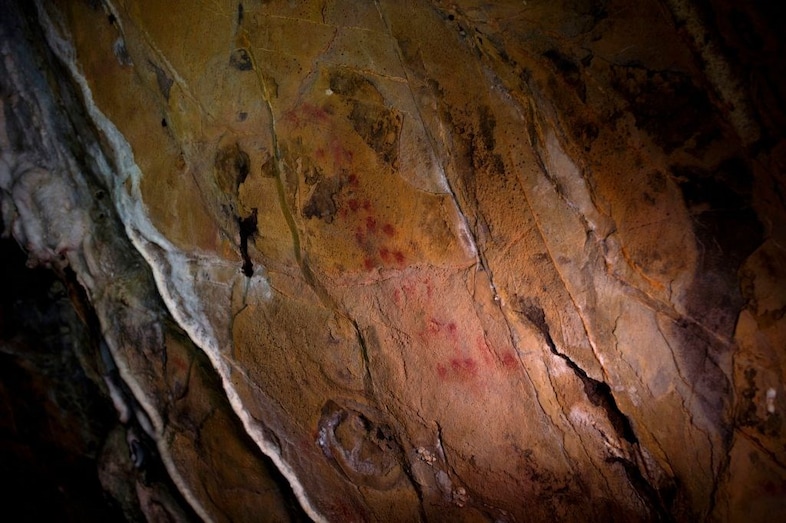 Neanderthal cave-paintings inside the Andalusian cave of Ardales, on March 1, 2018Photo Jorge Guerrero/AFP via Getty Images
A LESSON FOR THE MODERN HUMAN
Neanderthal cave-paintings inside the Andalusian cave of Ardales, on March 1, 2018Photo Jorge Guerrero/AFP via Getty Images
A LESSON FOR THE MODERN HUMAN
Surely, part of Neanderthals’ allure is their label as our closest ancient relatives. As Slimak point out, that’s also why we can stand to learn the most from them, when it comes to how we live and interact with the world around us. “You can understand something only by comparing it to something else,” he suggests. Before we discovered other ancient hominins, the most obvious comparison for the modern human might have been a chimpanzee. According to the current science, though, our last common ancestor with chimps is expected to have existed some 7 million years ago. It’s fair to say that we’ve changed quite a bit since then. In this sense, Neanderthals are revolutionary. “Suddenly, we have a mirror [to see] another way to be human,” Slimak says. When we look at their tools, or art, and compare it to ours, we aren’t just doing it because we’re interested in how people like us lived 40,000 years ago or more. “We are talking about the deep nature of sapience.”
What has Slimak learned from looking in that mirror for the last three decades? For him, it comes back to the freedom and individuality that was allowed to thrive in Neanderthal culture, versus the love of uniformity that turned Homo sapiens into what we are today. Taken to its logical conclusion, he says, this uniformity has some very dark implications, from the authoritarian regimes of the twentieth century to the ongoing presence of war and genocide today. “We’re able to kill millions of people because they are just slightly different,” he says, citing the widespread complicity during the Holocaust as just one example. “90 per cent of sapiens will do the worst thing in the world, given the right conditions.”
Neanderthals must be fascinating for everybody, because they offer us the possibility to have a mirror, to see what we are on Earth
By contrast, he says, studying Neanderthals might teach us that it’s possible to tolerate radical difference and still thrive as a human species (after all, Neanderthals civilisations are estimated to have survived for more than 300,000 years). “I don’t want to paint a super dark picture of Homo sapiens,” he laughs. “I don‘t want to say Neanderthals are smart and nice, and Homo sapiens are stupid and dangerous. I have children, so I can’t say that! What I want to express is that... we can be better humans on earth.” In the case of Homo sapiens, this might require going against our biological nature and trying to love more like a Neanderthal, he suggests, but this requires us to see ourselves clearly and state our differences out loud. For this reason, humanity’s obsession with the Neanderthal needs to go beyond the narrow realm of paleolithic archaeology, and continue to spread throughout our culture. “They must be fascinating for everybody, because they offer us the possibility to have a mirror, to see what we are on Earth.”
ShareLink copied ✔️More on these topicsLife & CultureFeatureFutureExpand your creative community and connect with 15,000 creatives from around the world.
READ MORE

Inside the UK’s accelerating crackdown on student protests
How is AI changing sex work?
Trail shoe to fashion trailblazer: the rise of Salomon’s ACS PRO

Where have all the vegans gone?

Could ‘Bricking’ my phone make me feel something?
Love is not embarrassing
‘We’re trapped in hell’: Tea Hačić-Vlahović on her darkly comic new novel

Chris Kraus selects: What to do, read and watch this month
We asked young Americans how their job search is going

Hannah Botterman and Georgia Evans are championing queerness in rugby
Scientists are now making computers out of human brains