
 South_agency/Getty Images
The typical home improver today operates out of a mix of pride and necessity. Many people trying to maintain their home do so without the help of contractors and tradespeople because of the cost. Many homeowners also want to feel the satisfaction that comes from a job well done, with their own hands and tools. Plenty of homeowners know how to swap an old electrical outlet for a new option that includes USB sockets, or install new crown molding to complete a room. These are jobs that might be a little time-consuming and require some research, but they're not exactly "hard" to accomplish. The first job in any DIY project involves taking the time to understand the task and learn how to appropriately create the solution you're seeking.
I'm a homeowner with lots of experience fixing numerous quirks and issues in my own home. In today's market, many people are leveraging a huge portion of their homebuying budget just to get in the door, with little left to hire professionals to make important quality of life changes. I've spent years researching and writing about tools while dabbling in mechanic work, electrical installation, and good old-fashioned construction as a hobby — and at times, out of necessity. These are some of the most common mistakes that I've been able to avoid thanks to my research, or fallen victim to and had to work around personally. These pitfalls can make or break many DIY projects, so we'll explain how to avoid them.
Failing to evaluate the entire scope of a project before starting
 Ferrantraite/Getty Images
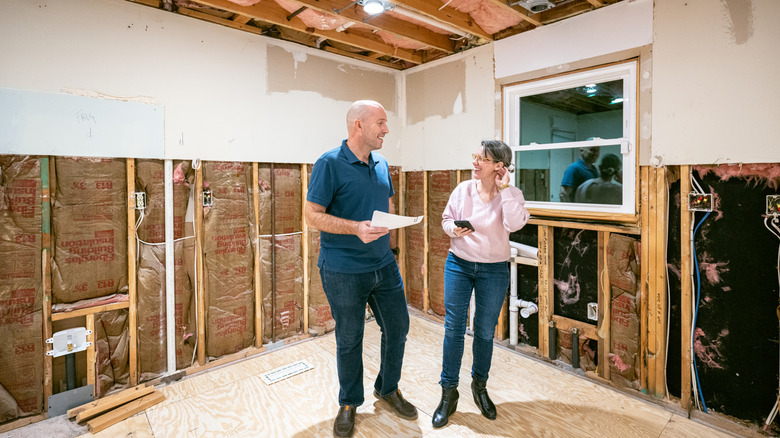
One thing a professional tends to have over hobbyists is comprehensive knowledge. The entirety of any home improvement project encompasses a lot more than it might seem. If you are laying new hardwood floors, for instance, the first job is obvious. You'll need to tear up the existing flooring before any new installation. You may also need to buy a specialized tool for the job. Then there's the skirting boards to deal with, among other preparations, and you'll also need to bring waste materials to the dump. All this runs on a fluid timeline. Professional renovators have developed an internal understanding of these kinds of workflows. They have a sense for the time and basic outline of a typical job from start to finish. DIYers frequently overlook small aspects of a project and then either scramble to make things work or settle for something that isn't to the standard they were hoping to achieve.
In order to avoid this situation, you need to evaluate the finished product you're hoping to create and then work backwards, from end to start, considering each element that needs to be handled along the way. For instance, when I fixed my living room, adding laminate floors in the process, I had to move and add electrical outlets before doing anything else because I needed to run wires underneath the subfloor rather than through walls.
Going over budget
 Bird stocker TH/Shutterstock
It's easy to go over budget on just about any kind of renovation project. This also happens with contractors in tow, but DIY renovations run the risk of blowing their budget for a variety of added reasons. You're not on the hook for the contractor's drill bits or grinder discs. If a contractor's tool breaks, or they're missing an important addition to the toolkit, you also won't have to shell out extra money to remedy this. Those costs fall to the contractor.
As a renovator doing it yourself, If you need a new oscillating multitool, or if you burn out the teeth on your miter saw, or break the last drill bit in your toolbox, the cost of these extras falls on you directly. That's the nature of DIY work. That's not to say that this is a bad way to tackle home improvement projects; This is just a warning that budgets can quickly inflate as a result of a DIYer's toolbox gaps and a lack of accessories. Before you approach any new project, it's important to understand which tools and equipment you'll need to get the job done so that you can add new required purchases to the total cost of the work, whether that's a specialized grinder disc (alongside a healthy respect for the nerve-racking tool) or an entirely new tool like a heat gun or a dead blow hammer. Fortunately, whenever you buy something new, you get to keep the gear for later use.
Minimizing safety needs
 Rafa Jodar/Getty Images
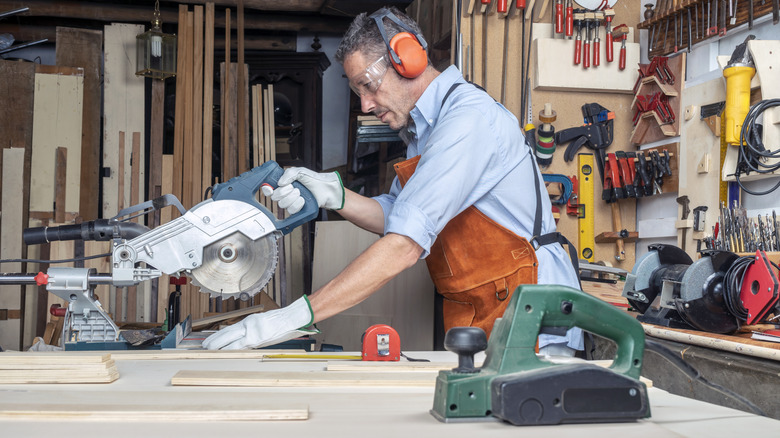
Safety is an ever-present concern during any work you might do with tools. Safety comes in a few flavors, however. Professional contractors will have a few mental tools at their disposal, making them better equipped to handle safety needs. There's obviously the concern of cutting yourself with a saw or smashing your hand with a hammer. Understanding a few important best practices for using your tools safely can help minimize risk but maintaining a vigilant state of mind is always important. It only takes one quick slip to induce a trip to the emergency room, and these often come when fatigue begins to set in at the end of a workday or when you fall into a sense of security through repetitive tasks.
Then there are the worksite risks the professionals don't fumble around with, but DIY renovators may fail to recognize. One of the biggest mistakes you can make when working on electrical systems is failing to turn off the power before starting the task. Cord management is another big one. If you aren't practicing cord discipline, you might trip over one while cutting a board or fastening a screw, potentially damaging a workpiece or injuring yourself.
Lastly, DIYers sometimes fail to fully protect themselves from environmental factors, skipping over some must-have safety equipment. Wearing ear and eye protection is always important. If you're kicking debris into the air, it's also essential to throw a mask over your mouth and nose. It only takes one or two encounters with these issues while not properly protected to understand the value of these basic safety essentials.
Choosing cheap materials over durable alternatives
 VPales/Shutterstock
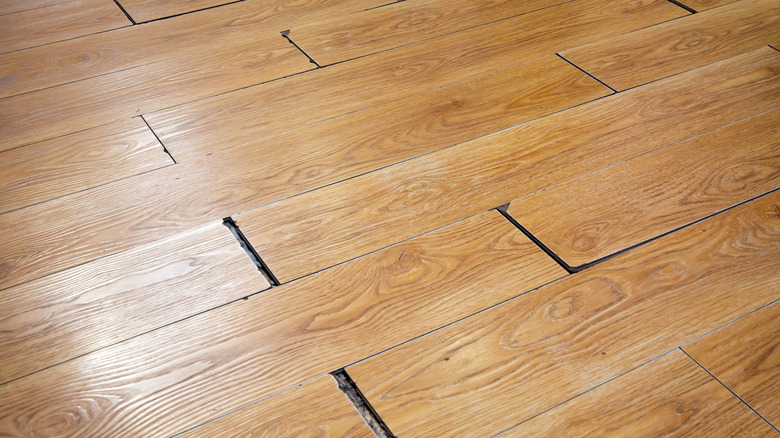
Cheap materials get a bad rap sometimes. There's nothing inherently wrong with buying inexpensive material at times. It's also worthwhile to shop around and purchase your materials wherever you can find them the cheapest. One place that's worth exploring is the cull lumber pile at your local big box stores. Cull lumber can be found for as much as 90% off the sticker price, but features a variety of significant issues throughout. This may not be a problem if you're cutting boards down into smaller pieces, though.
Where this comes into play most dramatically is often in finish components. Cheap materials can be useful in a range of hidden elements. Structural solutions don't need to be pretty, so ugly-looking boards and other similar cost saving measures can be useful in keeping your budget intact while giving you the material you need. However, utilizing lower quality plywood or even going for OSB to finish off cabinets or doors that will be visible is a great way to make the project exude a cheap look.
It's also worth exploring the tradeoffs between durability and cost saving opportunities. In many instances, more expensive parts will last longer. Anything that's going to be in contact with the elements, for instance, needs to be heat treated, pressure treated, or coated to add to the material's lifespan. A regular piece of lumber that hasn't been properly prepared for outdoor environments is likely to fail much faster when used as a beam to build a deck, for instance.
Not paying attention during disassembly
 Dragonimages/Getty Images
One of the most frustrating issues you can run into as a DIY installer involves putting things back together the way you found them. In many home improvement projects, you'll take pieces apart in order to access recessed spaces or covered areas. This can be as simple as a Venetian blind in the window or as complex as the pipe and wire connections to your water heater. Regardless of the thing you are moving, putting it back together at the end of the job is essential to closing the book on the project. There's no getting around the need to reinstall components or replace elements that have been moved. Unfortunately for many DIYers, it's possible or even likely that you won't have any experience dealing with this particular object or assembly, so putting things back together can be tricky. The longer it takes, the more frustrated a renovator tends to become, complicating the process even further.
Paying careful attention during the disassembly phase is essential for anyone who wants to avoid a nerve racking rebuild. Taking your time during the disassembly process so that you know exactly how things go back together is critical. It's also a good idea to jot down some notes or take pictures of the unit as you take things apart. Making a basic record of how something is correctly assembled will save you lots of time and plenty of hassle when you get to the end stages of your task.
Forgetting how long jobs actually take
 Juthamat Yamuangmorn/Getty Images
No matter the project you're working on, you will probably find that it takes longer than you anticipate. Electrical work, landscaping tasks, and drywalling are all physically demanding, time-consuming jobs that can easily become bigger than you expect. Professional contractors work in these fields on a daily basis, so they are well-equipped to deal with the curveballs a job might throw at them. DIY home improvers may have a good mental understanding of what the task requires, but without the wealth of muscle memory to back up that knowledge, any unexpected complication can make the task notably broader, adding crucial hours to the time it takes to complete the job.
Beyond this, there's also the physicality of the work that needs to be taken into consideration. DIY enthusiasts are sometimes forced into this life of tackling home improvement projects during weekend days or in the evenings after finishing up their day job. Regardless of your profession, if you don't lift and move blocks or cut plywood sheets every day, you're probably not fully prepared for the physical demands of that work. Even electrical work, in which you won't be lifting any heavy objects, requires you to frequently contort your body or reach up above your head while calling upon fine motor skills. Even small jobs are physically taxing, and you're likely to become fatigued easier than you expect, slowing down as you go.
Patching holes instead of fixing root problems
 rafa jodar/Shutterstock
During many renovation projects there will come a point where you have to choose between a quick fix and something more significant. Tearing a project area down to its base in order to start at the bare bones is time-consuming, and may even be notably more expensive. But you can be sure that a job is done right when you choose to go this route. You won't always run into this need to add more to your plate than you originally expect, but when the need arises, it's important not to dismiss it.
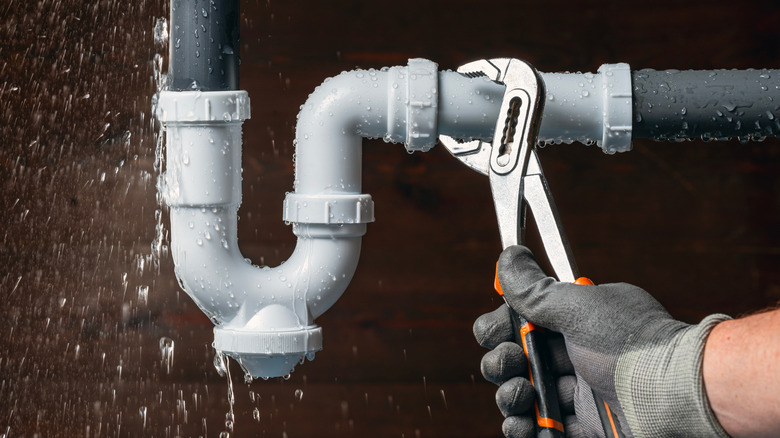
The problem is that when you begin the deconstruction process of just about any home improvement project, you'll naturally come across a variety of unknowns. One prominent example is moisture located in surprising places. Anytime you come across leaks or other sources of moisture in the house, you'll ultimately create more problems than you solve by just papering over the issue. By doing this, you end up sealing in the problem, allowing it to fester beneath the surface without easy access to fix it later on. There are plenty of surprising finds you'll make when tackling DIY projects. Getting frustrated by them and simply thinking that you can ignore newly found issues only creates more headaches for you down the line.
Tackling too many jobs at once
 Josefephotography/Getty Images
Many people are familiar with the concept of burning the candle "at both ends." A DIYer can create this kind of scenario for themselves by pouring too much of their time outside the office into a project, certainly. But DIY renovators also run the risk of burning "too many candles" as they take on new projects around the house. It's easy to get excited about a project and ultimately launch into numerous jobs all at once. I've been guilty of this, and I'd imagine many other renovators working on to-do list items have suffered the same fate. Enthusiasm over what the finished product will look like can often lead people to jump the gun and tackle a wide-reaching project in whole chunks rather than approaching it in bite sized pieces.
One way to keep your projects tamed is to only focus on one room at a time, or to tackle jobs in different fields in sequence rather than together. If you're renovating two bedrooms, do all of the electrical work or HVAC improvements before moving on to painting in both rooms, for instance. Alternatively, you might focus on one room in its entirety before jumping to the next in order to keep fighting off mission creep. Tackling too many jobs at once can leave you frazzled and confused, ultimately creating a situation in which you're too tired and frustrated to get anything done well or in a timely manner.
Buying tools when you could strategically rent them
 Around the World Photos/Shutterstock
Buying tools is something that every DIY enthusiast will do, and this happens on a regular basis for some. Even though new tool purchases can expand the range of your capabilities, it's actually not the best approach during every project. Some tools are too niche in their application, or offer plenty of functionality but are excessively expensive, so much that buying equipment can actually become a waste of money rather than an upgrade to your collection. Renting power tools instead offers an advantageous path.
In many instances, you might require a specialized tool to help you accomplish a job. This may be a task you will only engage in once, making the tool a purchase that you'll use for this singular job and then stick on the shelf to collect dust. I don't own a concrete saw, for instance. This is an expensive, niche cutting tool, and I will need one for a project already penned in to my winter task list. But the tool doesn't offer widespread, ongoing value in my collection beyond this one job. Instead of buying one for a hefty price tag, I plan on renting the tool for the day, in order to create the coverage I need. Fortunately for DIYers, there are lots of stores that offer tool rental services.
Not syncing up with your work partners
 Kerkez/Getty Images
Plenty of DIY tasks start with a basic conversation about ideas. Many homeowners working on improvements around the house discuss their hopes for the property with a spouse or another significant other. Whether you're working together on a project or one half of the partnership is doing the job while the other spectates, it's critically important to get on the same page before work commences — and then stay there throughout the project! Failing to sync up with your work partner can create a unique set of circumstances that makes everyone involved in the task frustrated. If you're not on the same page, it's easy to arrive at wildly different expected outcomes. This can leave one person feeling excited about the finished product and the other wondering why certain choices were made or feeling underwhelmed or even angry. It's also possible to misunderstand the communal goals, creating a sudden need to make an about-face halfway through the work. This can create confusion, frustration, and overtax the project's budget.
The same can be said for DIY renovators who work with occasional helpers. I have frequently played both roles while tackling projects alongside my father-in-law. Whether it's my home or his, coming out of sync with one another during a job leads to frustrations on both ends. Maintaining constant communication with one another is crucial in staying on the same page and remaining useful to each other as you work through any task that's on your plate.
Going the DIY route if you don't have the skill or confidence to complete the job
 Daniel Balakov/Getty Images
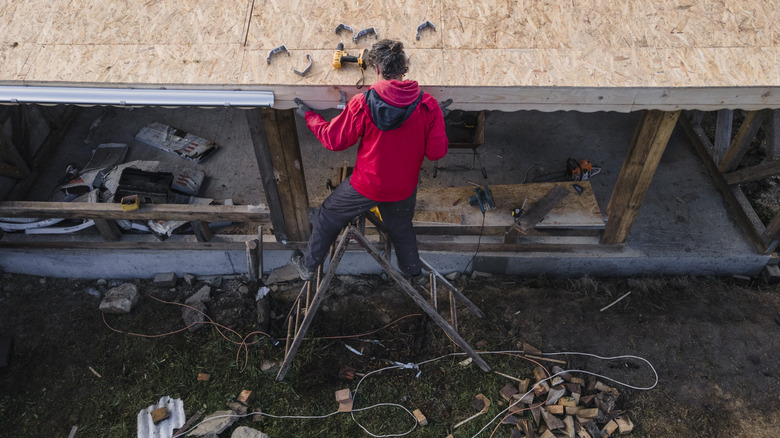
Finally, you likely won't be able to perform every job that you want to enact in your home. There's just not enough time to master every skill you might encounter as a renovator. I'm fairly confident in my own ability to do a wide range of tasks to at least a decent standard, but I am woefully inadequate when it comes to plastering on a large scale. Any finished product I have put out in this realm has been somewhere between terrible and awful. Rather than trying to rise to the standard I'd like for these tasks, anything beyond a simple repair is something that requires professional help. This is a finished product that you'll see on a regular basis, and because my skill just isn't up to snuff, I can't count on my ability to get the job done well enough. I also don't have enough opportunity or time to practice this skill to improve.
Sometimes you just need to call an expert in order to get the job done right. For some, this might be electrical work, for others it's laying carpet, installing new plumbing elements, or even painting. DIY enthusiasts pride themselves on their ability to adapt and bring new techniques into their wheelhouse. But it's also critically important to know where your limitations lie and to call on expert assistance when you reach those barriers.