BunsenLabs Carbon keeps the CrunchBang flame alive with Debian 13

BunsenLabs Carbon keeps the CrunchBang flame alive with Debian 13
Release lays the groundwork for going Wayland, if that's your sort of thing

BunsenLabs Linux is a lightweight, Debian-based distro forked from CrunchBang, and seven months after Debian 13 "Trixie" arrived, the project has released its latest version, dubbed Carbon.
This version replaces multiple core components of the BunsenLabs' characteristic and slightly idiosyncratic setup with alternatives that can work on both X11 and the Wayland-based labwc compositor. For now, this version still defaults to Openbox on X.org, but the maintainers are making things ready for a transition to Wayland.
BunsenLabs Linux is the original "community continuation" of the lightweight CrunchBang Linux distro. BunsenLabs was announced in February 2015, just days after CrunchBang called it quits.
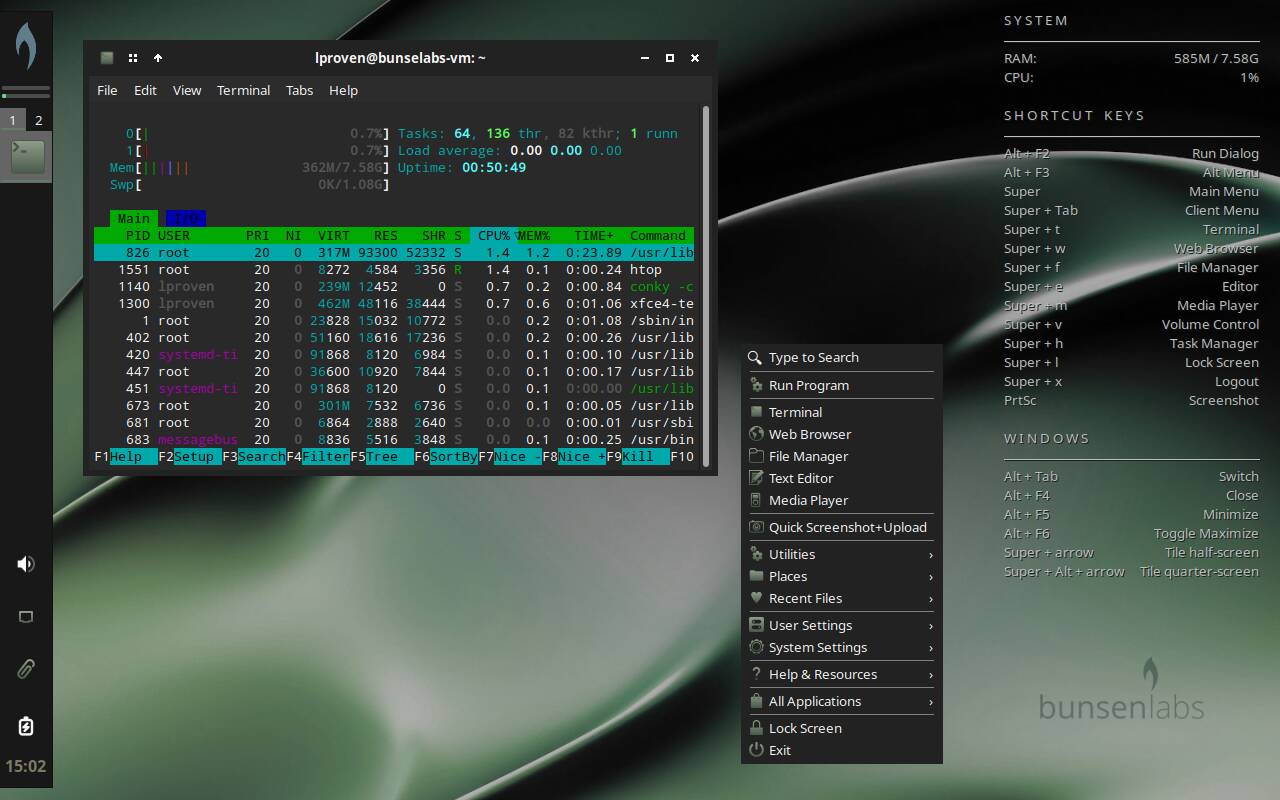
The new Debian 13-based BunsenLabs Carbon moves slightly further from its CrunchBang roots, but it's all good
The other continuation of CrunchBang is a mainly one-man project by Ben "Computermouth" Young, called CrunchBang++. We compared the two in 2024 when both released their Debian 12-based versions. At the time, we commented that CB++ was the more technologically conservative of the two. It sticks very close to the model set by the original CrunchBang. CB++ tends to release sooner, and as we mentioned back in October 2025, the Debian 13 version of CB++ was released in August, soon after Debian 13 itself. We have tried CB++ 13, and it sticks close to its tried-and-tested design. It still uses the X11-based Openbox window manager and tint2 panel.
As we wrote a couple of years ago, BunsenLabs is the more experimental and innovative of the two sibling offshoots. This is more apparent than ever with the Debian 13 version. For instance, the tint2 panel is gone, replaced by xfce4-panel from the Xfce desktop, and similarly, LXDE's lxterminal has also been replaced with its Xfce equivalent, xfce4-terminal.
The window manager is still Openbox, though, and the desktop looks very similar to before. There's a vertical floating panel on the left, no desktop icons, and a Conky system monitor with a list of the hotkeys for quickly launching applications using the Super (Windows) key. The main difference is that, while the old tint2 panel shows icons for both virtual desktops at once, in two sections, now there's a virtual desktop indicator with two numbers, and you must switch between the two to see what's running on them.
- Stop macOS 26 nagging with one tiny policy tweak
- Firefox 149 beta develops a split personality
- LibreOffice Online dragged out of the attic, dusted off for another go
- Debian 14 will drop Gtk2 – unless Ardour rides to the rescue
It's not radically different, but it has lost a little of its distinctive look. The Xfce panel makes it easier to adjust settings – it has a built-in GUI for this, rather than the menus offering an entry that opens the relevant config file in the default editor, which is the traditional CrunchBang way. The panel shows icons for apps using the stock Xfce window-buttons component, set to hide labels.
It's not as functional as additional components such as the DockbarX plugin (as seen in Asmi), or the Docklike Taskbar (as seen in MX Linux), but it's simpler and it does the job. There is a menu button at the top, but rather than either of Xfce's start-menu analogs, it launches a version of the classic CrunchBang-style app menu, now called bl-menu.
BunsenLabs uses more shading and gradients than the austere monochrome of CB++, but it's still quite stark. Although it's Debian underneath, systemd and all, it's still quite lightweight: Conky reports about 550 MB of RAM in use, and it takes about 4.4 GB of disk, which is quite good for 2026. We have a copy of CB++ 13 on our geriatric ThinkPad W500 – although it has a few extra apps installed – and the BunsenLabs Carbon release uses less RAM and less disk space.
The maintainer of CB++ has told us that he is investigating the possibility of doing a variant of the distro based on Alpine Linux instead of Debian, which we would very much like to see. In the meantime, though, they are both solid choices – and it has to be admitted that Bunsen is rather prettier, as well as slightly lighter. ®
