By Brendan ColeShareNewsweek is a Trust Project member
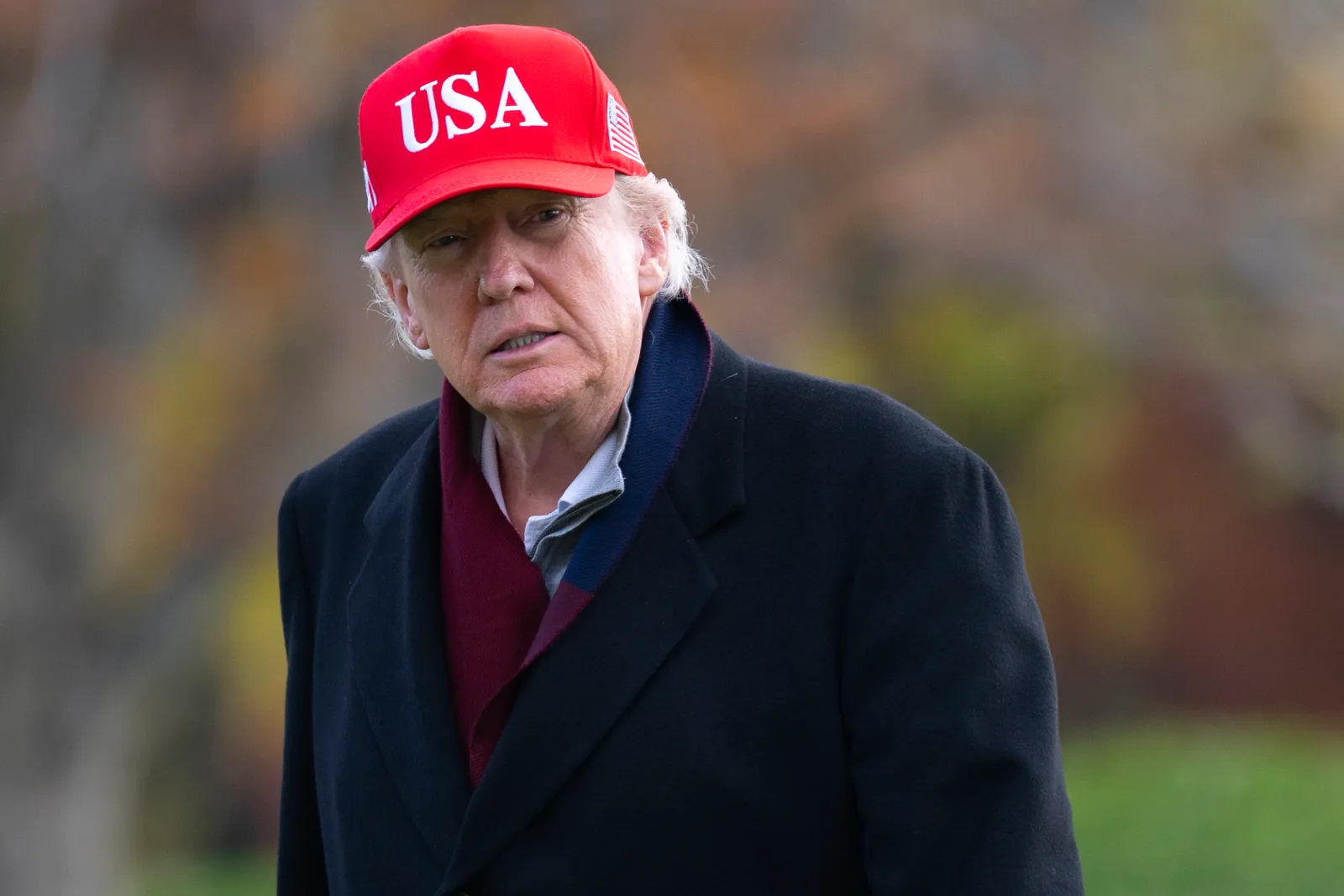
With the presidential election in Honduras on a knife edge, President Donald Trump alleged counting had been "prematurely stopped" and warned there would be "hell to pay" if officials "tried to change the results." He has openly backed conservative National Party candidate Nasry Asfura who was tied with Liberal Party candidate Salvador Nasralla.
It was not the only warning about pay the president had issued to Honduras should Asfura not win. Last week, Trump threatened to withhold funds to Tegucigalpa.
The intervention speaks to a broader shift in policy focus under Trump's "America First" movement that envisions the Americas, and especially Latin America, as a whole as part of the U.S. zone of interest, an outlook reminiscent of the 200-year-old Monroe Doctrine that served as the basis for U.S. intervention against European colonialism and communist expansion across the region.
Trump's footprint in the Western Hemisphere is being extended via brickbats to those he opposes, such as the presidents of Venezuela, Colombia and Brazil, but also via bouquets to his allies.
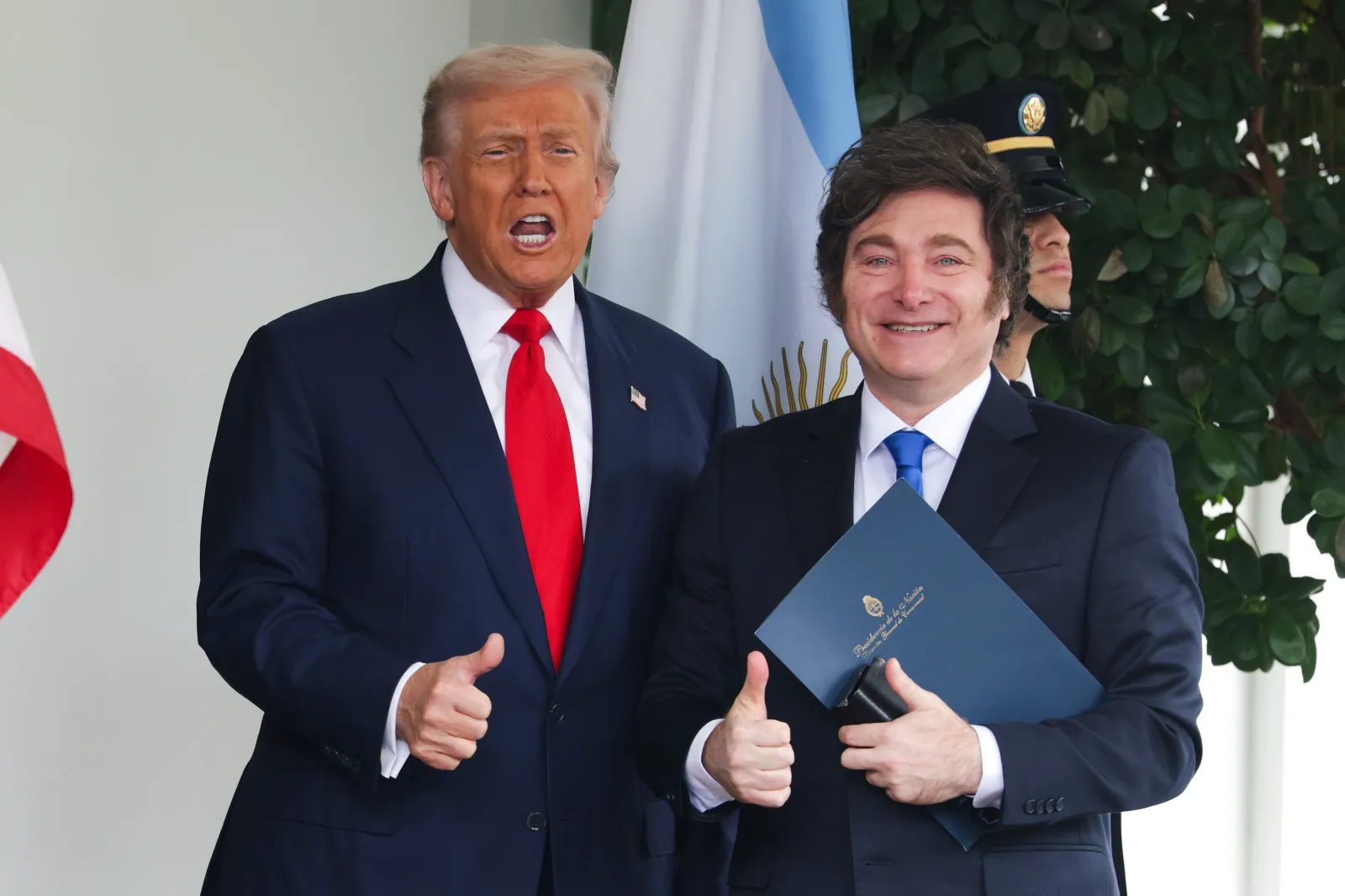
In Argentina, October’s midterms delivered gains for the party of Trump favorite President Javier Milei, after a $20 billion U.S. currency-swap/economic-stabilization agreement, as well as a White House visit—one that was also afforded El Salvador’s right-wing leader Nayib Bukele, a MAGA favorite.
"He's using U.S. resources to extend a partisan movement and intervene in local politics," Christopher Sabatini, senior research fellow for Latin America, U.S. and North America Program at the Chatham House think tank, told Newsweek.
 ...
...Our Man in Honduras?
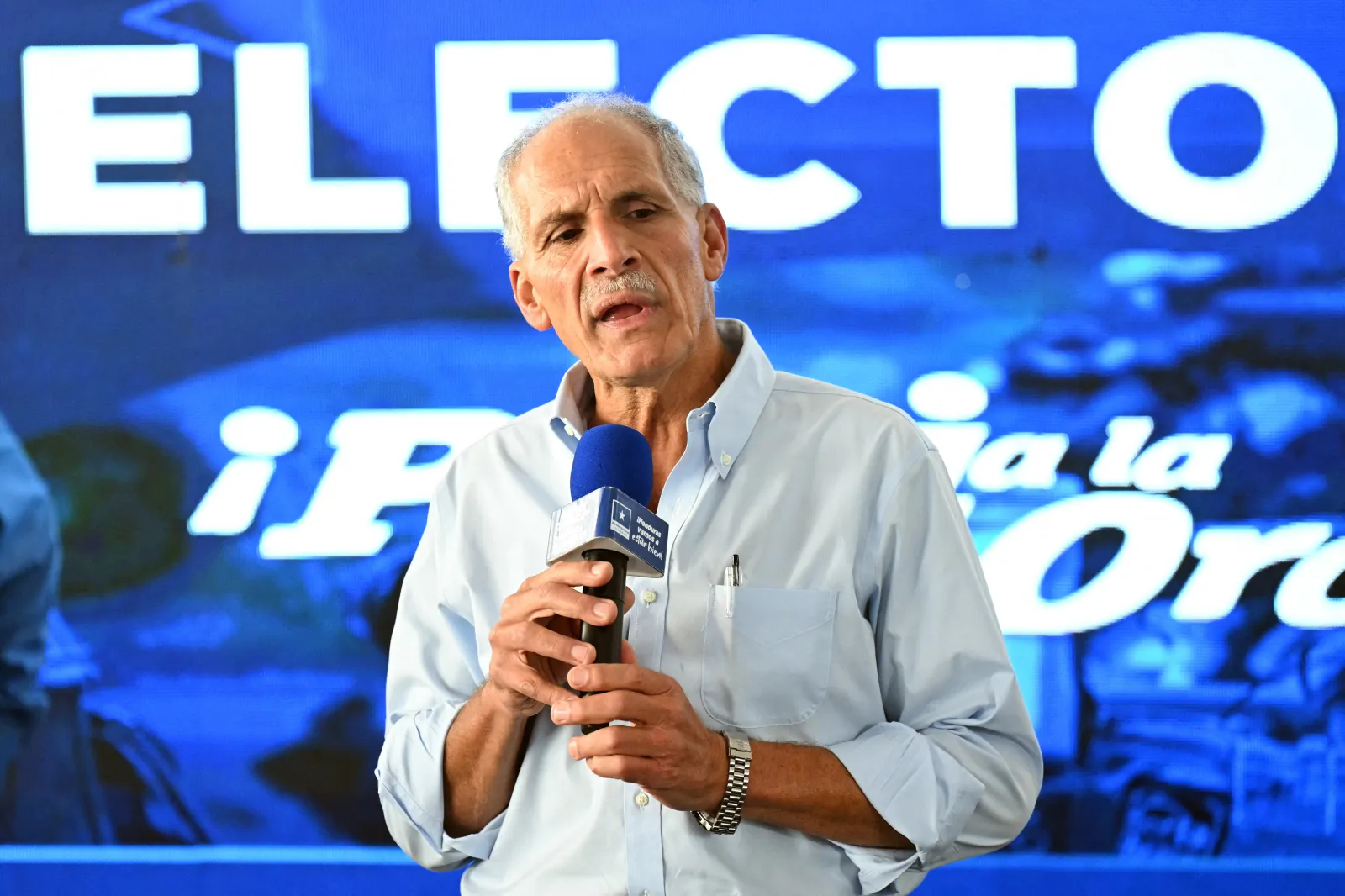
By Tuesday, only several hundred votes separated Asfura and Nasralla, as election website problems raised the specter of challenges and protests ahead. In 2017, violence followed a disputed election in which Juan Orlando Hernández claimed victory.
The fate of Hernández was part of Trump’s messaging about Sunday’s election, as he said he would pardon the ex-president’s 45‑year U.S. jail term for drug trafficking. Asfura, whom Trump praised in the same Truth Social post, is from the same party as Hernández.
Sabatini said the prospect of Hernandez’s release, which has not been confirmed, did not help the campaign of Asfura, who has kept quiet about it.
On that count, Trump may have misread the level of unpopularity of Hernandez who presided over rising levels of crime and violence, said Sabatini, adding that otherwise the level of the U.S. president’s intervention in Honduras had been "unprecedented."
This is because, over the last three decades, the U.S. government has studiously stayed out of endorsing a candidate, unless they were standing against an autocratic government, such as in Nicaragua. "Rarely, if ever, has a U.S. president explicitly dangled money as a reward for people to select someone in a sovereign electoral process," he said.
Trump said in social media posts Asfura could be a good Washington ally to counter drug trafficking and that continued U.S. support would depend on his winning.
The U.S. gave Honduras $193 million in the last fiscal year, according to State Department figures. This year, the U.S. has provided over $102 million, although $167 million in economic and governance aid that had been earmarked for 2024 and 2025 has been cut, according to the Center for Global Development, a nonpartisan think tank.
"They're being bribed by a U.S. president," said Sabatini. He argued the policy was part of a larger partisan project, expressed by Vice President JD Vance’s call for the German government to work with the far-right party Alternative for Germany (AfD).
 ...
...Far Left 'Rejection'
Trump threatened tougher tariffs on Brazil's exports, a move later reversed, in a move framed by critics as punishment for the trial of one of Trump’s allies, former President Jair Bolsonaro. Gustavo Petro, president of traditional U.S. ally Colombia, has also faced Trump’s ire and an aid cut, after he was dubbed "an illegal drug leader."
"This is about signaling, ‘play ball with me and we'll reward you, don't, and you can get sanctioned, or your country could get tariffs,'" said Sabatini. "It's also an attempt to send a message to Colombian voters ahead of their election in 2026 to vote for a conservative candidate at which point, presumably, Trump will restore security assistance."
There does not appear to be any pushback from nationalists in Latin America against Trump throwing his weight around the region, even in Argentina, where polls showed unhappiness at Trump's intervention. Sabatini said this was because citizens across Latin America were prioritizing crime and security.
"Donald Trump has represented himself as the man with an iron fist who can deal with this," he said. "This has a certain appeal to citizens."
Ian Vásquez, vice president for international studies at the Cato Institute, a U.S. think tank, told Newsweek Trump was riding a wave of the rejection of the far left in Latin America, exemplified by the election in Honduras.
Vásquez said a victory for Asfura would be a "huge loss" for the left and bring a U.S.-aligned government that "will be beneficial to the Trump administration's approach to the region," especially given the presence of the key Soto Cano Air Base.
"He is being much more transactional and acting more like a bully in the region than previous administrations," said Vásquez, noting how on trade, Trump is much more protectionist than his predecessors.
He also differs from previous administrations in his hard-line immigration stance. "You would think that this would create a surge of hostility for the United States because it surely doesn't favor Latin America," said Vásquez.
While the Honduras election was ongoing, Trump posted a warning on Truth Social: "Airlines, Pilots, Drug Dealers, and Human Traffickers, please consider THE AIRSPACE ABOVE AND SURROUNDING VENEZUELA TO BE CLOSED IN ITS ENTIRETY." This has added to speculation the U.S. military buildup in the southern Caribbean will presage a land attack or missile strikes to precipitate regime change in Venezuela.
 ...
...The U.S. does not recognize Venezuela's government, saying elections last year were rigged, and accuses President Nicolas Maduro of leading a drug-trafficking cartel—which he firmly denies—using this as a pretext for two dozen strikes on boats in the southern Caribbean that have killed at least 83 people.
But neither Trump, nor his voters, would want to see American boots on the ground, said Vasquez. "The ideal solution would be that the government collapses because of internal divisions or a negotiated exit from Maduro," followed by an interim government and elections, he added.
Regional Risks
Most Central American governments have aligned themselves with Trump’s deportation and migration agenda, said Felix Cook, director of Americas Delivery, Corporate Intelligence, at intelligence and risk consultancy S-RM. Meanwhile, Panama—whose canal Trump has publicly vowed to "take back"—is accommodating U.S. geostrategic demands, he added.
"The longer-term risk for the U.S. is that Trump’s heavy-handed tactics may push the more self-sufficient regional powers, including Brazil, Mexico, Chile, and Peru, to deepen their engagement with U.S. geopolitical competitors like China as a hedging strategy," Cook told Newsweek. He compared this with President Theodore Roosevelt's "Big Stick" diplomacy of the early 20th century, which "ultimately fueled Latin American flirtation with the Soviet Union."
According to Sabatini, a presidential run-off election in Chile on December 14 is likely to see a win for moderate right-wing candidate José Antonio Kast, giving Trump another ally in the hemisphere. And last week, Dominican President Luis Abinader, who is aligned with Trump, authorized the U.S. military to operate inside restricted zones of the San Isidro Air Base and Las Américas International Airport, in a professed anti-narcotics push.
"Trump is reasserting U.S. dominance in the hemisphere in a commercial, partisan, even a nationalistic way," said Sabatini. "And the chips are falling in place, just as the electoral cycle across the hemisphere is falling in its place."
Request Reprint & LicensingSubmit CorrectionView Editorial & AI Guidelines Add Newsweek as a preferred source on Google to see more of our trusted coverage when you search.
Recommended For You
 NewsChipotle Launches Free Food Initiative3 min read
 NewsCitizenship Requirements to Change For Millions of Americans Under New Bill4 min read
 NewsPastor Threatens To Report Woman to ICE Over Parking Space3 min read
 U.S.Housing Affordability ‘Considerably Worse’ Than Five Years Ago4 min read
 NewsUncommon Knowledge: What Europe Can Teach Trump about Immigration5 min read
 NewsTennessee Special Election Could Be Kamala Harris’ Revenge on Donald Trump6 min read
Related Podcasts
Top Stories
 Live BlogPutin Issues Stark Warning to Europe As He Meets Witkoff, Kushner—Live Updates3 min readNewsUncommon Knowledge: What Europe Can Teach Trump about Immigration6 min read
 U.S.Aileen Cannon Issued Update on Release of Jack Smith’s Trump Report6 min read
 WorldWho is Admiral Frank Bradley? Commander in Spotlight Over Venezuela Strike4 min read
 NewsPutin ‘Ready to Fight’ NATO Allies1 min read
 NewsUS Mulls ‘Full Travel Ban’: List of Countries Which Could Be Added5 min read
Trending
 WeatherList of Schools Closed Tuesday as Snowstorm Hits4 min read
 ImmigrationGreen Card Update: New Changes for Holders in December6 min read
 ViralCat Arrives at Vet for Neuter, Staff Not Ready for What’s in the Carrier3 min read
 Black FridayBlack Friday Spending Raises Eyebrows Over US Economy8 min read
 PollsTennessee Special Election Day: Final Polls, Predictions4 min read
Opinion
 OpinionConventional Wisdom: Pope Visits Turkey and Lebanon Edition3 min read
 OpinionForeign Energy Companies Have No Home in Our Forests | Opinion4 min read
 OpinionThe Hemp Ban Shows America Still Works | Opinion4 min read
 OpinionConventional Wisdom: The Somali Minnesota Welfare Fraud Edition4 min read
 OpinionRedefining Professional Degrees Will Hurt Everyday Americans | Opinion5 min read