- Home
Edition
Africa Australia Brasil Canada Canada (français) España Europe France Global Indonesia New Zealand United Kingdom United States Edition:
Global
Edition:
Global
- Africa
- Australia
- Brasil
- Canada
- Canada (français)
- España
- Europe
- France
- Indonesia
- New Zealand
- United Kingdom
- United States
Academic rigour, journalistic flair
 Flames from the Donnie Creek wildfire burn along a ridge top north of Fort St. John, B.C., in July 2023.
(AP Photo/Noah Berger)
From earthquakes to wildfires, Canada is woefully ill-prepared for disasters
Published: December 2, 2025 3.21pm GMT
Brodie Ramin, L’Université d’Ottawa/University of Ottawa
Flames from the Donnie Creek wildfire burn along a ridge top north of Fort St. John, B.C., in July 2023.
(AP Photo/Noah Berger)
From earthquakes to wildfires, Canada is woefully ill-prepared for disasters
Published: December 2, 2025 3.21pm GMT
Brodie Ramin, L’Université d’Ottawa/University of Ottawa
Author
-
 Brodie Ramin
Assistant Professor, Faculty of Medicine, L’Université d’Ottawa/University of Ottawa
Disclosure statement
Brodie Ramin does not work for, consult, own shares in or receive funding from any company or organisation that would benefit from this article, and has disclosed no relevant affiliations beyond their academic appointment.
Partners

University of Ottawa provides funding as a founding partner of The Conversation CA-FR.
University of Ottawa provides funding as a member of The Conversation CA.
View all partners
DOI
https://doi.org/10.64628/AAM.ar9ds9w6w
https://theconversation.com/from-earthquakes-to-wildfires-canada-is-woefully-ill-prepared-for-disasters-270848 https://theconversation.com/from-earthquakes-to-wildfires-canada-is-woefully-ill-prepared-for-disasters-270848 Link copied Share articleShare article
Copy link Email Bluesky Facebook WhatsApp Messenger LinkedIn X (Twitter)Print article
A fault line in Canada’s Yukon territory has stirred after more than 12,000 years of geological sleep. Researchers studying the Tintina Fault, which stretches 1,000 kilometres from northeast British Columbia into the Yukon and towards Alaska, have found evidence that the fault has built up at least six metres of unrelieved strain.
Like a loaded weapon, it may now be primed for a massive earthquake. To most Canadians, the news passed as a remote curiosity from the North, but the fault lies within a tectonic system that extends under Western Canada and hints at deeper vulnerabilities in eastern Ontario and beyond. Below the surface lies an uneasy truth: Canada is not immune to catastrophe.
A wildfire burned through the hills of Los Angeles in early 2025. Schools closed, emergency alerts buzzed across phones and emergency crews scrambled to get ahead of the flames as Southern California experienced one of its worst wildfire seasons on record, again.
Read more: False alerts — like the one sent during the Greater Los Angeles wildfires — can undermine trust and provoke anxiety
Meanwhile, in Canada, smoke from record-breaking wildfires blanketed major cities, sending air quality plummeting in Ottawa, Toronto and Montréal.
These events may feel far apart, but they share one common feature: a failure to act before the crisis hits.
Ignoring early warning signs
A recent survey found that most Canadians don’t believe their communities are ready for a major disaster. And yet, outside of the occasional fire drill or emergency alert test, Canadians continue living as though preparedness is someone else’s job.
But readiness isn’t just about cramming bottled water into your basement or changing the batteries in your smoke alarms. It’s about how we think, and more importantly, what we choose to ignore.
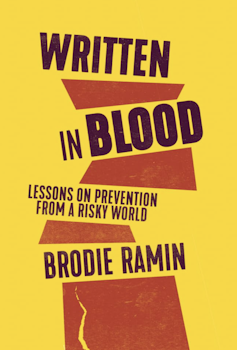 The cover of the author’s book on disaster preparedness.
(University of Toronto Press)
The cover of the author’s book on disaster preparedness.
(University of Toronto Press)
As a writer and prevention-minded physician, I’ve spent years studying how disasters unfold and how they might have been prevented. My new book, Written in Blood: Lessons on Prevention from a Risky World, investigates tragedies like nuclear meltdowns, natural disasters and pandemics. In case after case, I found a pattern: early warning signs were ignored, systems failed to communicate and people trusted that “someone else” had it covered.
The real danger isn’t nature or technology, it’s complacency.
Responding to the last disaster, not the next one
In Canada, the year 2023 saw the most hectares burned in wildfire history. Yet only one in four Canadian households reported making any preparation for a weather-related emergency in the past year.
When we ignore the cracks in our systems, we normalize risk. It’s easy to imagine preparedness as the government’s job or the job of emergency responders. But the reality is more complex, and the responsibilities should be more widespread.
Cities continue using outdated flood-risk maps that underestimate current climate realities. Schools overlook basic upgrades to improve air quality or ventilation. Transit networks run on aging infrastructure.
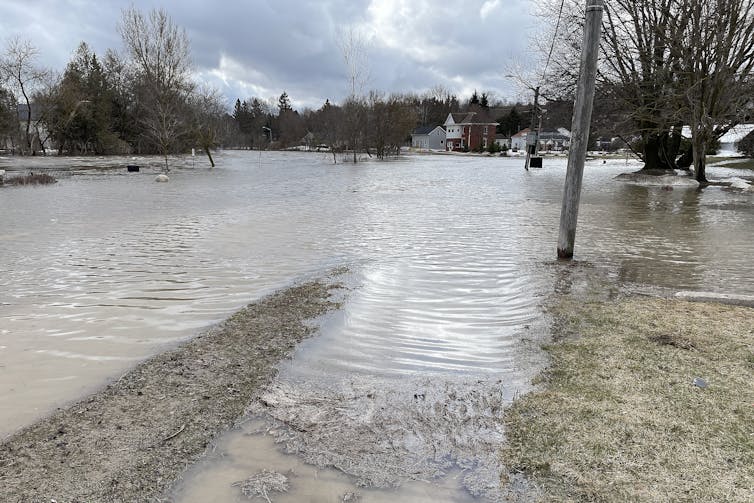 Flood waters in Grand Valley, Ont., along the Grand River, in March 2025.
THE CANADIAN PRESS/Rob Skeoch
Flood waters in Grand Valley, Ont., along the Grand River, in March 2025.
THE CANADIAN PRESS/Rob Skeoch
Canada’s cyber-security agency recently warned that hostile entities are targeting internet-connected control systems across the country, including those that manage water supplies, energy infrastructure and agricultural operations.
Read more: Silent cyber threats: How shadow AI could undermine Canada’s digital health defences
The lesson here isn’t that Canadians need to panic, it’s that they need to think differently. In sectors like aviation or nuclear energy, safety is baked into every process. These fields rely on layered safeguards, robust near-miss reporting and a culture of constant vigilance. They know safety isn’t a checkbox, it’s a mindset.
So why doesn’t that same mindset exist in other parts of our society, and how can Canadian officials ensure it does?
A prevention mindset
Instead of reacting to disasters once they happen, Canadians should be asking:
- What could go wrong here?
- What would I wish I had done if it does go wrong?
This approach — a prevention mindset — doesn’t mean living in fear. It means being proactive when the headlines are quiet. It means investing in safety when no crisis is visible and building defences before something breaks.
Take the Los Angeles wildfire as a case study. Fire crews had been warning about dry conditions for months. Urban expansion and outdated building codes exacerbated the damage.
At the same time, cities in Canada had barely updated evacuation plans or wildfire risk assessments, despite years of worsening climate conditions. Last summer, toxic wildfire smoke shut down outdoor events , harmed the lung health of a large proportion of Canadians and exposed major planning failures.
These are not just “acts of God.” They’re also policy choices, deferred upgrades and missing item lines in a budget. And they are repeated across sectors — from health care to cybersecurity, from education to urban planning.
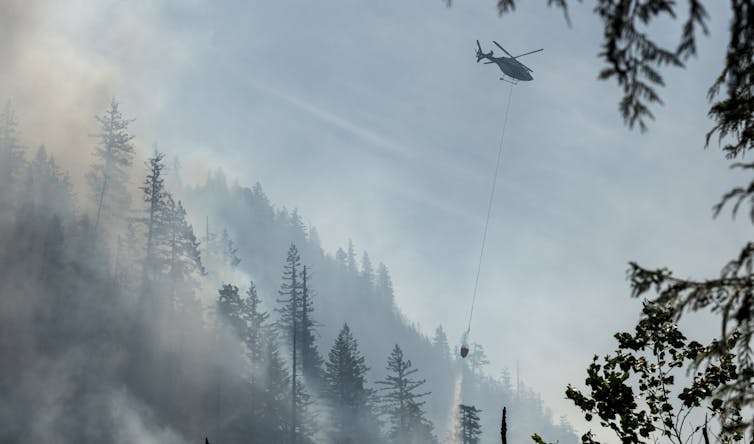 A helicopter drops water on the Dryden Creek Wildfire, just north of Squamish, B.C., in June 2025.
THE CANADIAN PRESS/ Tijana Martin
A helicopter drops water on the Dryden Creek Wildfire, just north of Squamish, B.C., in June 2025.
THE CANADIAN PRESS/ Tijana Martin
Safety must be built
Disasters feel sudden, but their roots often stretch back years. In Written in Blood, I explore the slow buildup to catastrophes like the Fukushima nuclear meltdown in Japan, the Notre- Dame fire in Paris and the Beirut port explosion. These were not lightning strikes — they were failures of imagination, leadership and system design.
The next crisis, whether wildfire, data breach, infrastructure collapse or disease outbreak, is already somewhere on the horizon.
The question isn’t if it will happen. It’s whether we will meet it with surprise — or with a plan.
- Earthquakes
- Floods
- Natural disasters
- Disaster management
- Risk management
- Emergency management
- Wildfires
Events
Jobs
-
 Senior Lecturer, Clinical Psychology
-
University Lecturer in Early Childhood Education
-
Case Specialist, Student Information and Regulatory Reporting
-
Lecturer in Paramedicine
-
Associate Lecturer, Social Work
 Senior Lecturer, Clinical Psychology
 University Lecturer in Early Childhood Education
 Case Specialist, Student Information and Regulatory Reporting
 Lecturer in Paramedicine
 Associate Lecturer, Social Work
- Editorial Policies
- Community standards
- Republishing guidelines
- Analytics
- Our feeds
- Get newsletter
- Who we are
- Our charter
- Our team
- Partners and funders
- Resource for media
- Contact us
-
-
-
-
Copyright © 2010–2025, The Conversation