
- Lifestyle
The star is receiving the best reviews of his career so far for ‘Marty Supreme’, and his offbeat charm offensive has gone into overdrive ahead of the film’s release. Katie Rosseinsky explores how his unconventional approach is redefining stardom for a new generation
Wednesday 03 December 2025 06:00 GMTComments
 CloseTimothée Chalamet stars in new Josh Safdie movie Marty Supreme
Stay ahead of the curve with our weekly guide to the latest trends, fashion, relationships and more
Stay ahead of the curve with our weekly guide to the latest trends, fashion, relationships and more
Stay ahead of the curve with our weekly guide to the latest trends, fashion, relationships and more
Email*SIGN UPI would like to be emailed about offers, events and updates from The Independent. Read our Privacy notice
At the Screen Actors Guild Awards back in February, Timothée Chalamet laid out his mission statement with a bracing, earnest clarity. “I know we’re in a subjective business, but the truth is, I’m really in pursuit of greatness,” the actor told a room full of fellow performers, after accepting the Best Actor trophy for his portrayal of a young Bob Dylan in the biopic A Complete Unknown. “I know people don’t usually talk like that, but I want to be one of the greats.”
Acting may be a profession of rampant egos, but it is surprisingly rare to hear an actor set out his ambitions, his desire to be the best, in such a straightforward way. As Chalamet put it, his industry peers “don’t usually talk like that”. Their awards speeches tend to be full of self-deprecation, carefully curated relatability or attempts at positioning themselves as some kind of underdog, rather than striving for more recognition, status or fame.
Naturally, then, Chalamet’s speech proved divisive. Was it endearingly honest? Was it an abrasive display of self-confidence that bordered on self-aggrandisement? Would a female star on Chalamet’s level have the audacity to say something similar about her career trajectory? Or had Timmy just been listening to too many motivational podcasts?
Fast-forward towards the end of this year, though, and Chalamet seems to be making significant strides towards the “greatness” he spoke of. He has received rave reviews across the board for his performance as a mid-century table tennis pro in Josh Safdie’s new movie Marty Supreme, which lands in UK cinemas on Boxing Day.
“If Marty Supreme exists to prove that Timothée Chalamet could have easily kicked it with the New Hollywood icons of the Seventies, the Harvey Keitels and the Gena Rowlandses, then point proven,” The Independent’s film critic Clarisse Loughrey wrote. “He’s truly one of our greatest talents.” The Guardian hailed him as “a smash”, while The Times suggested his “showboating turn” is “bound to snag an Oscar nomination, possibly even the Best Actor award”.
 open image in galleryChalamet spoke about his desire for ‘greatness’ in his Screen Actors Guild speech earlier this year (Getty)
Still, at this point in his (admittedly brief) working life, compliments like these are almost a given. We’re talking, after all, about a star who has already managed to pick up two Oscar nominations (for his breakout role in Call Me By Your Name and for his turn as Dylan in A Complete Unknown) before reaching 30. That is no mean feat when the Academy has historically prioritised older male performers. But what’s arguably more intriguing is Chalamet’s highly strategic – and highly unconventional – approach to playing the fame game at this crucial point in his career.
At promotional events for Marty Supreme, Chalamet has been flanked by a group of men wearing massive orange ping pong balls over their heads, like a tangerine guard of honour. Earlier this month, he released a very meta parody video on social media, in which he played an ego-tripping version of himself dominating a Zoom marketing meeting for the movie, suggesting increasingly unviable stunts (how about painting the Statue of Liberty orange? Or dropping ping pong balls from a branded blimp). According to a Vogue interview, he spent six months working on co-designing a line of merch for the film, apparently at least partially bankrolling the venture himself. It was worth it: the branded hoodies and jackets have been worn by the likes of Kendall Jenner, the Biebers and various sports stars, becoming the unlikely viral streetwear hit of the season.
It is hard to imagine, say, the more fame-wary Paul Mescal – who at 29 years old and with an Oscar nomination under his belt is probably Chalamet’s closest equivalent in this year’s Academy Awards race – doing any of the above. But Chalamet is seemingly pulling off a rare feat: achieving critical acclaim and the respect of his peers while also unabashedly courting and cultivating a more mainstream audience for his work. In an age when box office sales are down and many so-called “event” movies launch with more of a whimper than a bang, has he forged a new blueprint for success?
Chalamet has always taken what he has called an “untraditional” approach to his career. A native New Yorker born to a French journalist father and a mother who danced on Broadway, he attended the city’s LaGuardia High School, a performing arts hothouse best known as the school that inspired Fame. While still a student, he landed a role in the hit thriller Homeland; his co-star Damian Lewis was so impressed that he implored his manager to sign this new talent immediately. “I think you should get on the phone right away with this kid, because I think very soon, everyone’s going to be on the phone with him,” Lewis advised.
 open image in galleryTimothée Chalamet is earning rave reviews for his performance in Josh Safdie’s ‘Marty Supreme’ (A24)
Instead of going down the well-trodden rising star route of signing a long-running TV contract just to up his visibility, Chalamet kept holding out for work he was genuinely interested in. “I had a marathon mentality, which is hard when everything is instant gratification,” he told Time in 2021. Indie roles and a part in Christopher Nolan’s Interstellar followed, but his breakout would come in 2017 in the form of Luca Guadagnino’s devastating queer romance Call Me By Your Name.
Chalamet played Elio, an Italian teen who falls hard for a handsome graduate student, played by Armie Hammer, over the course of a sweltering Lombardy summer. This small arthouse adaptation of André Aciman’s novel may not have set the box office alight, but Chalamet’s performance piqued the interest of industry tastemakers and mobilised a new generation of film fans who’d been on the lookout for a worthy idol. The fact that Chalamet – skinny, angular, with a mop of dark curls – didn’t look anything like the very macho Marvel stars dominating Hollywood at the time only made him a more intriguing prospect.
The following year, the 22-year-old Chalamet became the youngest Best Actor nominee since Mickey Rooney in 1940. He doubled down on his internet heartthrob status with brilliant supporting turns in Greta Gerwig’s coming-of-age tale Lady Bird and her adaptation of Little Women, played a Shakespearean prince in The King and was acclaimed for his sensitive portrayal of a drug-addicted teen in Beautiful Boy.
These smaller, more alternative choices showcased his obvious talent and provided strong foundations for the next stage of his career: the blockbuster era. Chalamet seemed immune to the lure of Marvel (fellow one-time teen idol Leonardo DiCaprio apparently advised him: “no hard drugs and no superhero movies”). Instead, he opted for something more interesting (and yes, a bit artsier), playing Paul Atreides in Denis Villeneuve's adaptation of the sprawling sci-fi saga Dune. It was a critical and commercial hit, and has spawned a handful of sequels.
Chalamet, in his own way, was now a fully fledged franchise star, but he’d pulled it off without entirely abandoning the sort of roles that made him famous. In a nice stroke of symmetry, Dune arrived in cinemas on the same day in 2021 as Wes Anderson’s aesthetically pleasing anthology story The French Dispatch, in which Chalamet played a very Gallic student revolutionary; the actor, it seemed, was still happy to take on smaller-scale, arthouse fare, while also headlining musicals (Wonka) and appearing in Netflix hits (Don’t Look Up).
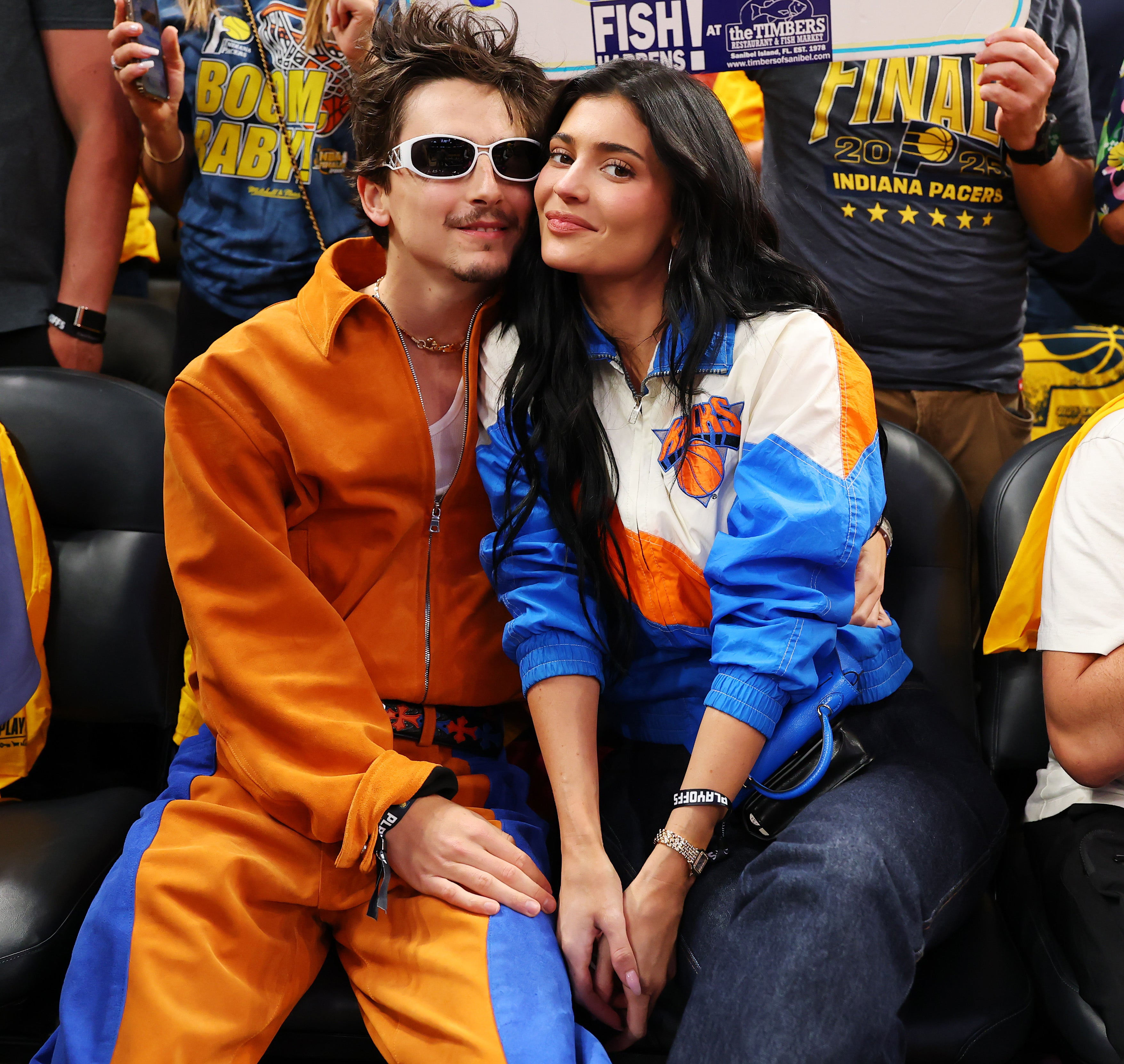 open image in galleryChalamet’s relationship with Kylie Jenner has put him in the tabloid glare (Getty)
His relationship with reality star and make-up mogul Kylie Jenner brought him into the tabloid glare, too. When news broke in 2023 that the pair were dating, the collective response was a mild bemusement, as their public personas couldn’t be more different (some commentary – along the lines of “what on earth do they talk about?” – was definitely laced with sexism). But there’s a certain logic to the match; both of them are clearly entrepreneurial and ambitious. It’s worth noting, too, that Chalamet’s high-profile romance hasn’t overshadowed his work, or dented the respect he gets from critics either (perhaps this is a privilege only afforded to men).
A Complete Unknown seemed to mark a sea change for Chalamet. He’d spent years learning to sing and play the guitar at a Dylan-worthy level – and, it seemed, he wanted the cinemagoing public to get out to see his efforts on the big screen. Towards the end of 2024, he embarked on a very Gen Z publicity blitz, turning up at a Timothée Chalamet lookalike contest in New York, arriving at the film’s premiere on a Lime bike, cropping up as an unlikely (but extremely well-informed) pundit on ESPN’s college football show and doing the rounds on various podcasts beloved by Gen-Zers.
It looked nothing like a traditional awards season campaign, but it worked. The film earned almost $140 million at the box office worldwide, and Chalamet got his Oscar nod (although a win proved elusive). And he’d managed to make a load of under-30s care about a Bob Dylan biopic, arguably no mean feat.
 open image in galleryAs Bob Dylan in ‘A Complete Unknown’ (Searchlight Pictures)
Most actors roll their eyes at doing the publicity rounds, but Chalamet seemed to embrace it. A recent interview with American Vogue shed light on his tactics: essentially, he doesn’t want to be acting into a void, performing for just a handful of dedicated arthouse filmgoers, or, as Vogue put it, “he has no interest in making prestige films for a vanishing population”. Instead, he wants to get his work out to the masses. “You don’t want to risk being too declarative,” he told the magazine. “But I also don’t want to look back on life and things I’ve put out and go, ‘Oh, little old me. Hey, see the movie if you want. It is what it is.’”
So the ping pong ball-headed bodyguards and the Zoom skits, then, are a clever way of getting people talking. Chalamet’s advantage is that he has grown up online, in the age of social media; he knows exactly what will go viral, and how to tap into the internet’s very specific brand of ironic, self-referential and extremely online humour. No wonder TikTok is teeming with videos unpacking not just the film’s trailer, but Chalamet’s marketing genius.
For some, his shift to a more “bro-ey” persona (the college football chat, the podcasts and the stunts) is a way of positioning himself in a more strident, macho or even Maga-coded pop cultural landscape; I’m not entirely convinced, but if so, it’s certainly proof that Chalamet is way ahead of the game when it comes to manoeuvring his public image.
It might not appeal to the purists, but it’s hard to deny that Timothée’s tactics are paying off: there’s arguably no other young actor working today who can command critical respect, industry approval and fervent fan appeal, all at the same time. As he put it to Vogue: “People can call me a try-hard, and they can say whatever the f**k. But I’m the one actually doing it here.”
More about
Timothee ChalametA Complete UnknownOscarsJoin our commenting forum
Join thought-provoking conversations, follow other Independent readers and see their replies
Comments