BTC 72,807.00 +6.62%
ETH 2,134.55 +7.66%
S&P 500 6,869.50 +0.78%
Dow Jones 48,739.41 +0.49%
Nasdaq 22,807.48 +1.29%
VIX 21.15 -10.27%
EUR/USD 1.09 +0.15%
USD/JPY 149.50 -0.05%
Gold 5,151.60 +0.33%
Oil (WTI) 76.11 +1.94%
BTC 72,807.00 +6.62%
ETH 2,134.55 +7.66%
S&P 500 6,869.50 +0.78%
Dow Jones 48,739.41 +0.49%
Nasdaq 22,807.48 +1.29%
VIX 21.15 -10.27%
EUR/USD 1.09 +0.15%
USD/JPY 149.50 -0.05%
Gold 5,151.60 +0.33%
Oil (WTI) 76.11 +1.94%

OpenAI raises $110 billion in largest-ever private tech funding round, Nvidia throws in $30 billion — AI startup now valued at $730 billion

| 2 Min Read
$50 billion from Amazon, $30 billion from Nvidia, and $30 billion from SoftBank, with additional investors expected to join as the round progresses.

OpenAI raises $110 billion in largest-ever private tech funding round, Nvidia throws in $30 billion — AI startup now valued at $730 billion

OpenAI
(Image credit: OpenAI)

OpenAI announced this week that it has closed a $110 billion funding round backed by Amazon, Nvidia, and SoftBank — the largest private tech financing in history — valuing the ChatGPT maker at $730 billion pre-money, or $840 billion including the capital raised. Alongside the cash, the company secured major infrastructure commitments tied to Nvidia's next-gen Vera Rubin GPU architecture and a dramatically expanded partnership with Amazon Web Services.

The breakdown is $50 billion from Amazon, $30 billion from Nvidia, and $30 billion from SoftBank, with additional investors expected to join as the round progresses. Amazon's initial commitment is for $15 billion, with the remaining $35 billion contingent on unnamed conditions being met in the coming months. The new valuation marks a significant jump from OpenAI's $500 billion in secondary financing last October, and more than doubles the $40 billion raised last year, which itself was a record at the time.
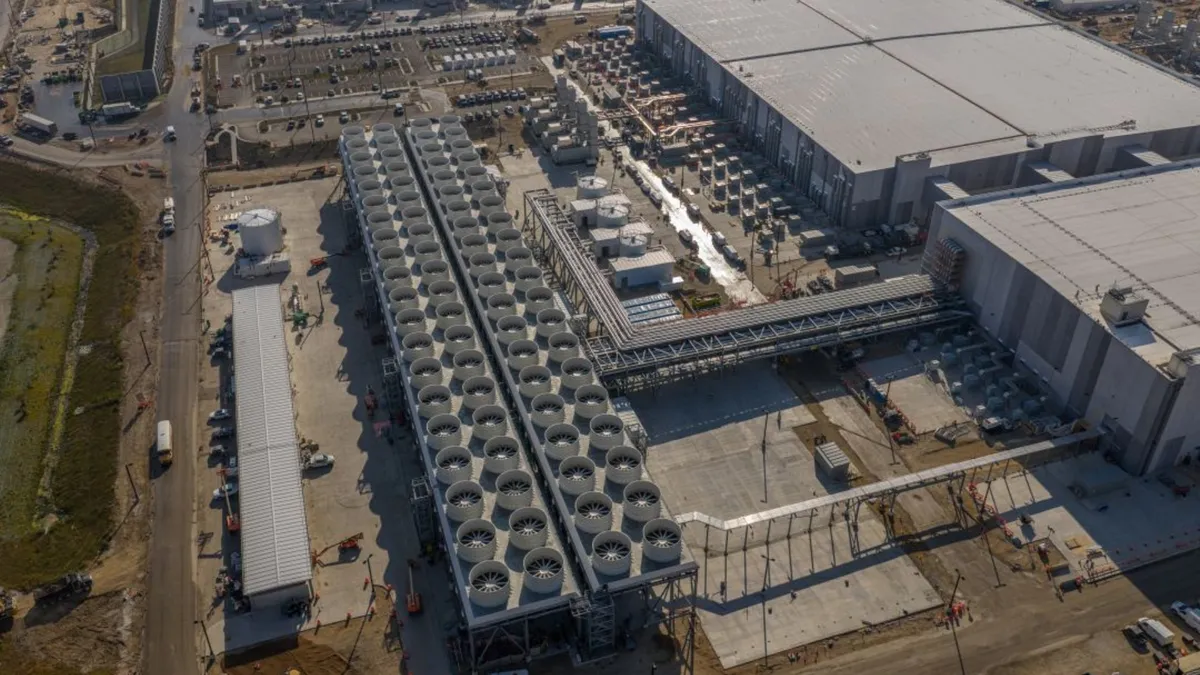
Under the terms of Nvidia’s stake, OpenAI has committed to using 3 gigawatts of dedicated inference capacity and 2 gigawatts of training on Vera Rubin systems, Nvidia's successor to the current Blackwell architecture. That capacity is in addition to the Hopper and Blackwell systems that OpenAI already operates across Microsoft Azure, Oracle Cloud Infrastructure, and CoreWeave.

On the Amazon side, OpenAI is expanding its existing $38 billion AWS compute agreement by $100 billion over the next eight years and has committed to consuming at least 2 gigawatts of Amazon's proprietary Trainium AI chip capacity. AWS also becomes the exclusive third-party cloud distribution channel for Frontier, OpenAI's enterprise platform. The two companies are additionally developing a new "stateful runtime environment" that will allow OpenAI models to run natively on Amazon's Bedrock platform. According to Amazon CEO Andy Jassy, this will "change what's possible for customers building AI apps and agents."

OpenAI and Microsoft issued a joint statement Friday confirming the Amazon deal does not change their existing arrangement. Azure remains the exclusive cloud provider for OpenAI's APIs and first-party products, and Microsoft retains its exclusive license to OpenAI's intellectual property.

To justify the scale of investment, OpenAI cited its current user figures: more than 900 million weekly active ChatGPT users, over 50 million paid consumer subscribers, and weekly Codex users, which have more than tripled since January to 1.6 million.

“We are entering a new phase where frontier AI moves from research into daily use at global scale. Leadership will be defined by who can scale infrastructure fast enough to meet demand, and turn that capacity into products people rely on,” reads the official press release, which goes on to explain that this round of funding will enable the company to do both and ensure “AGI benefits all of humanity.”

Follow Tom's Hardware on Google News, or add us as a preferred source, to get our latest news, analysis, & reviews in your feeds.


Google Preferred Source

TOPICS
Luke James
Contributor

Luke James is a freelance writer and journalist.  Although his background is in legal, he has a personal interest in all things tech, especially hardware and microelectronics, and anything regulatory. 

  • jp7189
    ..and here I thought most of OpenAI's first mover advantages had been eroded by everyone else catching up. I really look for any excuse to not use Google products, but most times when I run the same task against multiple models, Google is coming out ahead since 3.0 and now even more so with 3.1.

    Thats said, for local models, I'll take OpenAI's OSS all day everyday against Google's Gemma. Heck for specific tasks, there's probably a llama3 for that. That model is so versatile and trainable. I dont think any of that is attracting investment dollar though.
    Reply
  • rluker5
    jp7189 said:
    ..and here I thought most of OpenAI's first mover advantages had been eroded by everyone else catching up. I really look for any excuse to not use Google products, but most times when I run the same task against multiple models, Google is coming out ahead since 3.0 and now even more so with 3.1.

    Thats said, for local models, I'll take OpenAI's OSS all day everyday against Google's Gemma. Heck for specific tasks, there's probably a llama3 for that. That model is so versatile and trainable. I dont think any of that is attracting investment dollar though.
    I've heard you can run Google's translator locally on their phones. If you were out of the reach of their servers, in a place like a subway or out in the country and didn't have starlink.
    Maybe some of their camera enhancements can also be run locally?
    If cloud based AI starts using a subscription model this could throw a monkey wrench in that. Google sneaking in on some exclusivity.
    I'm guessing the consumer market for AI services will be mostly in the mobile market and I don't see OpenAI doing well there.
    Reply
  • dawbs
    Definitely worth investing in Nvidia, word is there new rubin range needs this so they can upgrade the power sockets to a higher grade plastic that doesn't melt as quick, Nvidia has lost public trust that's why most gamers have gone AMD they have gone straight to the money, tell trumps puppeteers they should start employing humans to keep an eye on what's going on instead of having money fights. And also stop hiding behind innocent people like Nvidia CEOs
    Reply

Comments

Please sign in to comment.
Rampagefang Market Intelligence