- News
West Africa's cattle herders are being stripped of their animals by extremist-linked armed groups as the deadly conflict in the Sahel region grows
Ope AdetayoWednesday 03 December 2025 05:20 GMTDeadly conflict in the Sahel sends herders fleeing to Africa's coastal cities
Show all 5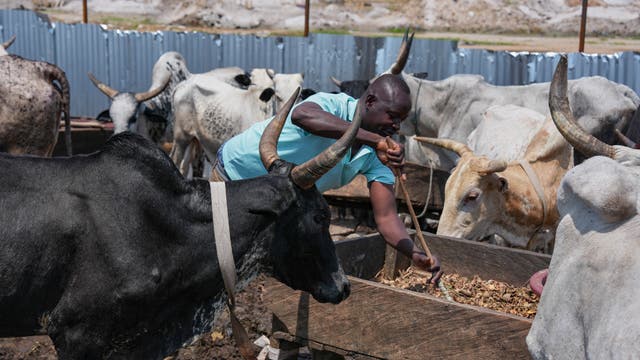

For free real time breaking news alerts sent straight to your inbox sign up to our breaking news emails
Sign up to our free breaking news emails
Sign up to our free breaking news emails
Email*SIGN UPI would like to be emailed about offers, events and updates from The Independent. Read our Privacy notice
Nouhoun Sidibè was a herder, like his father and grandfather, and took pride in his identity as a pastoralist. That's until the day armed men descended on his home in northern Burkina Faso and seized all his livestock.
Within minutes on that day in 2020, the father of four lost everything.
For the next three years, he wandered from town to town looking for jobs in the landlocked West African nation that faces growing attacks by armed groups, with some of the fighters linked to al-Qaida. He had no luck, and decided to try neighboring Ivory Coast in 2023.
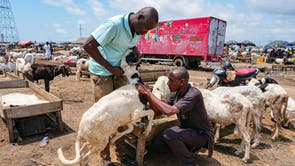
“I feel very, very lost. I was a chief, and now I have come here and I am working for someone else,” the 49-year-old Sidibè told The Associated Press at a stockyard in a swampy wasteland on the outskirts of Abidjan, the Ivory Coast capital. He and other migrants live in a cramped space with no bathroom or kitchen.
The sprawling conflict in the Sahel, a vast semi-arid stretch south of the Sahara desert, has sent thousands of herders to safer areas on the fringes of Abidjan, where they struggle to adapt to city life with rising costs and soaring unemployment. Sidibè now gets by helping cattle sellers vaccinate their herds.
He said the city was his only option: “You can’t keep livestock here, but since I didn’t have any anymore, there was nothing stopping me from coming."
That could change. This month, Ivory Coast said it was strengthening security along its northern borders after noting “several unusual flows of refugees from Mali.”
Stripped of identity, too
Countries in the Sahel have been fighting armed groups for years, starting with unrest in northern Mali in 2012 that has spread to landlocked Burkina Faso and Niger.
The struggle is reshaping West Africa, with a spike in migration into seaside countries like Ivory Coast.
Experts say armed groups target herders and seize livestock for various reasons, including to finance their operations and exert control over communities. Herding is a major occupation in the Sahel, where the changing climate also creates tensions with struggling farmers — another driver of migration.
Ivory Coast, with its status as a regional hub and steady economic growth, has long been a destination for migrants, according to analysts. But that migration has jumped in recent years after military juntas took power in Mali, Burkina Faso and Niger and took up the fight against armed groups.
Between January and March of this year, more than 72,000 people fled violence in Burkina Faso and Mali to Ivory Coast, according to data by UNICEF. That's up from the 54,000 recorded by the International Organization for Migration between April 2021 and March 2024.
Nomadic herders are among the most vulnerable people fleeing. They are often ethnic Fulani, Muslims who have faced accusations of sympathizing with or being recruited by armed groups. Many reject those claims and point out they're targeted by the fighters, too.
“There is no Fulani without his cattle, that is his identity,” Amadou Sonde, secretary general of the Federation of Burkinabè Fulani Associations in Ivory Coast, told the AP.
Sonde said he has been receiving thousands of people from Burkina Faso and Mali and helping them find jobs, a responsibility that has grown dramatically in recent years. The jobs include drivers, shop assistants and factory workers, often a world away from the pastoral life. Few have completed schooling.
“With the insecurity surrounding livestock and tensions between farmers and herders, there has been a trend among Fulani herd owners to switch to land acquisition, real estate or shops,” said Yao Kouamé, a research professor in sociology at Ivory Coast’s University of Bouakè.
‘The crisis is far from over’
Tanané Ibrahim fled his village in Burkina Faso after armed militants came for his herd of sheep and cattle three years ago. He doesn't plan to return.
“What is the point? The entire population has left for the city. The village is deserted,” the 42-year-old said. “The (militants) did not even leave the chickens.”
He was surrounded by fellow migrants by the wasteland outside Abidjan where they tend to other people's herds. They huddled as he brewed tea in small tin cups on a charcoal stove.
Experts say the conflict in the Sahel is worsening and there is no chance of the migrants returning home soon.
“The military juntas in the central Sahel states are becoming increasingly overwhelmed by assaults from multiple armed groups. The crisis is far from over,” said Oluwole Ojewale, a Senegal-based conflict expert at the Institute of Security Studies.
Like Sidibè, Ibrahim said he is struggling to adapt to city life and learn new skills to survive. He spoke with nostalgia about his nomadic past.
“It was total freedom. You’re with your animals, you can rest,” he said. “In the city, everything is crazy expensive. You have to work hard to get paid, and when you pay for what you need to live, you have nothing left, so you have to go back to work."
___
For more on Africa and development: https://apnews.com/hub/africa-pulse
The Associated Press receives financial support for global health and development coverage in Africa from the Gates Foundation. The AP is solely responsible for all content. Find AP’s standards for working with philanthropies, a list of supporters and funded coverage areas at AP.org.